
Top Materials for High-End Kitchens in NZ (2026 Edition)
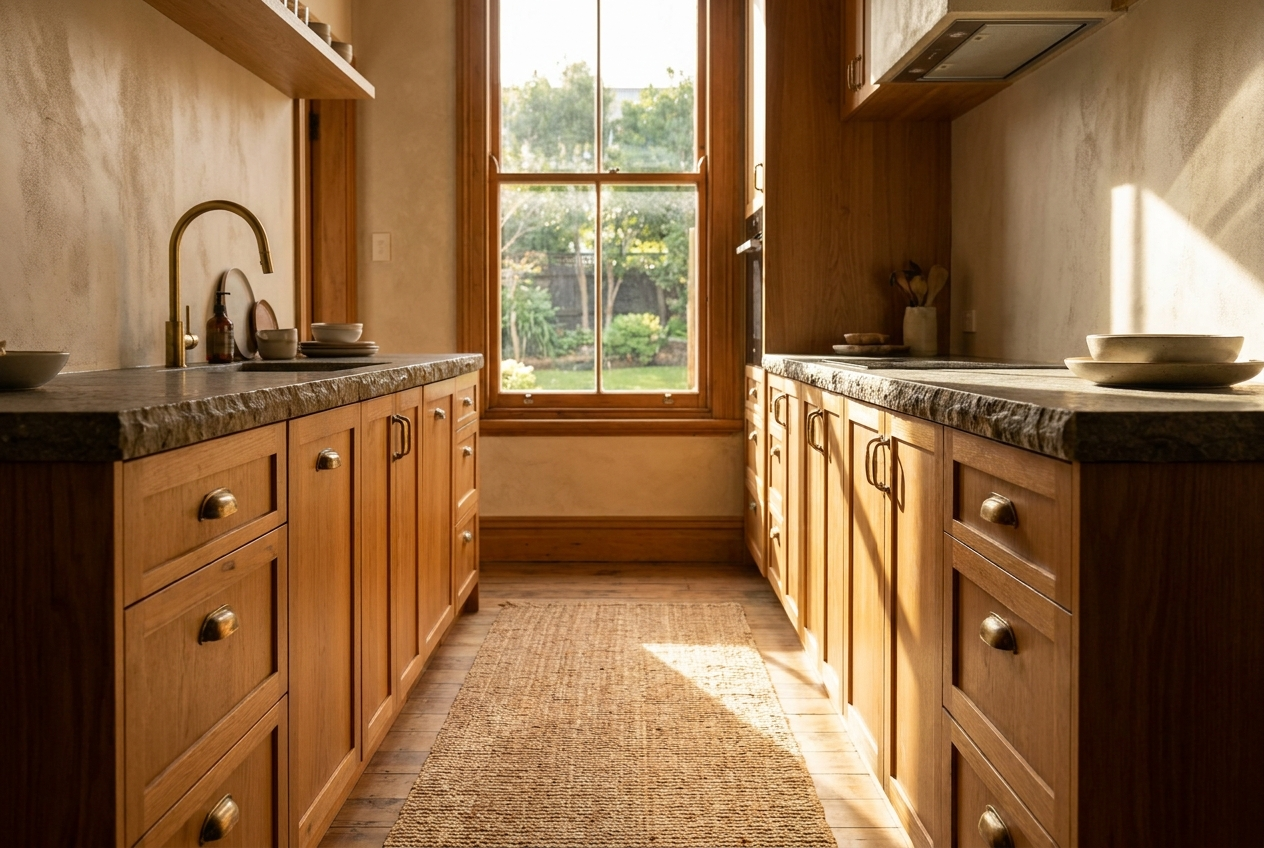
From engineered stone to soft oak cabinetry, here’s what Auckland’s best homes are using in 2026.
When you're planning a premium kitchen, your material choices matter just as much as layout and lighting. The right mix of surfaces, textures, and finishes can take your kitchen from ordinary to unforgettable.
Here’s what we’re seeing across Auckland’s most stylish kitchens in 2026—the best kitchen materials NZ homeowners are choosing for timeless, durable, and luxurious results.

Soft Oak Cabinetry (Natural or Whitewashed)
Timber tones are trending—especially in soft, natural finishes like whitewashed oak. This look brings warmth and texture into the kitchen without overwhelming the space.
Why it works:
Creates a light, calming base
Works with stone, brass, or matte black
Feels timeless and pairs well with both modern and heritage homes
Use it across base cabinets, full-height pantries, or even just a feature island.
Engineered Stone Benchtops (Veined or Honed)
Engineered stone remains the number one benchtop choice in high-end homes. For 2026, we’re seeing a shift to softer honed finishes and bold veining.
Top looks:
White stone with grey marble veins
Matte charcoal with subtle movement
Calacatta-inspired patterns with creamy undertones
These benchtops are low-maintenance, stain-resistant, and incredibly durable—perfect for busy family kitchens that still want a luxe finish.
Brushed Metal Tapware (Brass, Bronze, Nickel)
Forget chrome—2026 is all about brushed finishes. Warm metals like brushed brass, brushed copper, and soft bronze are dominating high-end renos.
What we’re seeing:
Brushed brass mixers paired with oak cabinetry
Gunmetal tapware for darker, moody kitchens
Brushed nickel as a neutral but elegant alternative
These finishes are fingerprint-resistant, modern, and work beautifully with zellige tiles and stone benchtops.
Handmade Splashback Tiles (Zellige + Kit Kat)
Splashbacks are becoming more than just a practical surface—they’re now a key styling feature. Handmade or handmade-look tiles are leading the way, especially zellige and slimline mosaic styles.
Client favourites:
Soft white zellige tiles with organic texture
Pale sage or eucalyptus tones for a nature-inspired palette
Vertical stacked kit-kat mosaics for a clean, modern look
They add depth, reflect light, and contrast beautifully with matte cabinetry and warm metals.
Seamless Cabinetry + Integrated Appliances
Today’s high-end kitchens are all about clean lines and hidden functionality. Integrated fridges, dishwashers, and appliance garages are a must-have in 2026.
What to include:
Full-height cabinetry panels for a seamless look
Push-to-open or handleless options
Custom internal drawer systems for easy organisation
This creates a calm, minimalist aesthetic that doesn’t sacrifice storage or practicality.
Final Thoughts
If you're renovating your kitchen in 2026, materials like soft oak, veined stone, brushed brass, and handmade tiles are leading the way in both style and function.
These aren’t just trends—they're long-lasting choices that elevate your kitchen without feeling overdone.
Want More Inspiration?
👉 See our 2026 Kitchen Design Trends Guide
👉 Explore our Pinterest boards for real material combos
👉 Book a free consult to start designing your dream kitchen
Choose for how it performs, not how it photographs
Everything above looks superb in a showroom. The question that actually matters is how each material behaves after five years of a family using it daily, and that is where the differences between them are enormous.
A kitchen is the hardest-working room in the house: heat, water, knives, red wine, turmeric, and somebody putting a hot pan down without thinking. Here is how the realistic options actually hold up.
Benchtops, compared honestly
Engineered stone remains the most popular choice in Auckland and for good reason: consistent colour and pattern, non-porous so it never needs sealing, very good stain resistance, and a wide price range. Its real weakness is heat. A hot pan straight from the hob can scorch or crack it, because the resin binding it is a polymer. Use a trivet, always.
One thing worth knowing: Australia banned engineered stone from mid-2024 because of the silicosis risk to the workers who cut it. New Zealand has not banned it, but the rules around how it is processed have been tightened, because the hazard is crystalline silica dust created during fabrication. This is a workplace-safety issue for fabricators rather than a risk in your finished kitchen, but it is why low-silica products and porcelain alternatives have grown quickly. Ask your fabricator how they control dust; a good one will have a clear answer.
Porcelain and sintered stone is the material that has genuinely changed in the last few years. Extremely hard, effectively heatproof, UV stable, non-porous, very low silica. You can put a hot pan on it. The trade-offs are that the pattern is printed on the surface so exposed edges need mitring to look right, and it is less forgiving to fabricate, which means you want someone experienced. For a kitchen that has to survive a family, it is frequently the best technical answer available.
Natural marble is beautiful and it will patina. It is porous, it etches on contact with anything acidic — lemon, wine, vinegar — and etching is a physical mark in the surface, not a stain you can clean off. It needs sealing and resealing. Choose it only if you genuinely like the idea of a surface that records your life. Plenty of people do, and they are happy. The people who are unhappy are the ones who expected it to stay pristine.
Granite is far harder and much more heat and scratch tolerant than marble, still needs periodic sealing, and reads as more traditional.
Stainless steel is the most hygienic and genuinely heatproof surface there is, which is why professional kitchens use it. It scratches into a patina and it is noisy. Superb on a scullery bench even if you would not want it on the island.
Solid timber is warm and repairable, sandable when damaged, and needs oiling. Keep it away from the sink unless you are prepared to maintain it properly.
Laminate has improved enormously and is not the poor relation it was. In a rental, a bach, or a scullery it is an entirely sensible decision. It will not survive heat or a knife, and a damaged edge cannot be repaired.
The carcass matters more than the door
This is the part nobody photographs and the part that determines whether your kitchen is still good in fifteen years.
Moisture-resistant board for the carcass, and non-negotiable for any cabinet near the sink, dishwasher or fridge. Standard MDF or particle board swells irreversibly the first time it gets properly wet, and swelling is not repairable.
Edge banding quality. Thin banding lifts at the corners within a few years, especially anywhere warm or damp. Thicker ABS banding is a small upcharge and it is where cheap joinery gives itself away first.
Hardware is where premium genuinely shows. Full-extension soft-close runners and quality hinges from a manufacturer like Blum or Hettich, with a real warranty. These are the parts you touch dozens of times a day, and failed runners on a heavy pot drawer are miserable. This is the best place to spend an extra thousand dollars in the whole kitchen.
Drawers over base cupboards wherever possible.
Back panels and adjustable feet, which matter more than usual in an older home where the floor is not level.
Door finishes, and how each one ages
2-pac (two-pack polyurethane) is the premium painted finish. Seamless, any colour, and genuinely repairable if damaged. It is the most expensive and it is what most high-end Auckland kitchens use.
Thermolaminate (vinyl wrap) is far cheaper and looks good initially, but the film can lift or discolour with heat, which is why you see it fail first on the door beside the oven. Avoid it next to heat sources.
Melamine is durable, affordable, and modern woodgrain melamines are convincing. An honest workhorse.
Timber veneer gives real grain at a fraction of solid timber, but it will shift colour in direct sun. If you have big north-facing glazing, ask about UV stability, because oak veneer fading unevenly behind a sunny window is a real outcome.
Solid timber moves with humidity. In Auckland's climate that means seasonal movement in doors and panels, which is normal and worth expecting rather than being alarmed by.
Splashbacks
Full-height stone or porcelain matching the bench is the seamless, no-grout, easiest-to-clean option and the most expensive. Tile gives you texture and colour, and handmade tiles like zellige have genuine character, but grout behind a hob needs sealing and will need attention. Glass is easy to clean and has dated somewhat. Whatever you choose, get the outlet cut-outs designed in rather than drilled later.
What ages badly
Said plainly, because this is the expensive kind of mistake:
Very high-gloss doors show every fingerprint and every surface imperfection.
Thermolaminate beside an oven.
White grout behind a hob.
Unsealed porous stone around a sink.
Cheap runners on heavy drawers.
A strongly of-the-moment colour on expensive joinery. Put the trend in the splashback, the handles and the paint, where changing it costs hundreds rather than tens of thousands.
In a villa or bungalow, two extra things
Nothing is square. After a century of settlement, walls run out by 20 or 30mm. Custom joinery scribed to fit is not an indulgence in an older home, it is what stops you looking at tapering gaps. Flatpack assumes square walls and older Auckland houses do not have them.
Moisture and movement. Older homes are cooler and damper, subfloors breathe, and timber moves more. Moisture-resistant carcasses matter more here, not less. Our custom joinery cost guide covers what bespoke cabinetry actually runs to, and there is more on character homes in our villa renovation guide.
Where to spend and where to hold back
Spend on: hardware, the carcass, the benchtop, and extraction. These are structural to how the kitchen works and all of them are expensive to change later.
Hold back on: appliance brand beyond the point of genuine quality, the trend-led colour, and the second sink you will not use.
For what all of this adds up to, see our Auckland kitchen cost breakdown, or talk to us about a kitchen renovation.
Frequently Asked Questions
What are the most popular kitchen materials in NZ right now?
In 2026, soft oak cabinetry, honed engineered stone, brushed brass tapware, and handmade splashbacks are the standout choices for stylish, high-end homes.
Are these materials hard to maintain?
Not at all. Engineered stone and brushed finishes are designed to be low-maintenance. We help select products that are durable and family-friendly.
Can I mix finishes in one kitchen?
Yes, as long as it’s intentional. For example, oak cabinetry pairs beautifully with both brass and matte black. Stick to 2–3 core finishes to keep it cohesive.
Can you help me select materials?
Absolutely. At Key Interiors, we guide you through every selection, with access to trusted suppliers and samples to touch and feel in person.