
Small Laundry Room Ideas That Actually Work in NZ Homes (2026 Edition)
Living in Auckland means making the most of every square metre—especially when it comes to laundries. Whether you're in a villa, townhouse, or compact unit, chances are your laundry is more cupboard than room. But don’t worry—small space doesn’t mean small impact. Here’s how to turn your tight laundry into a space that’s practical, beautiful, and totally functional.
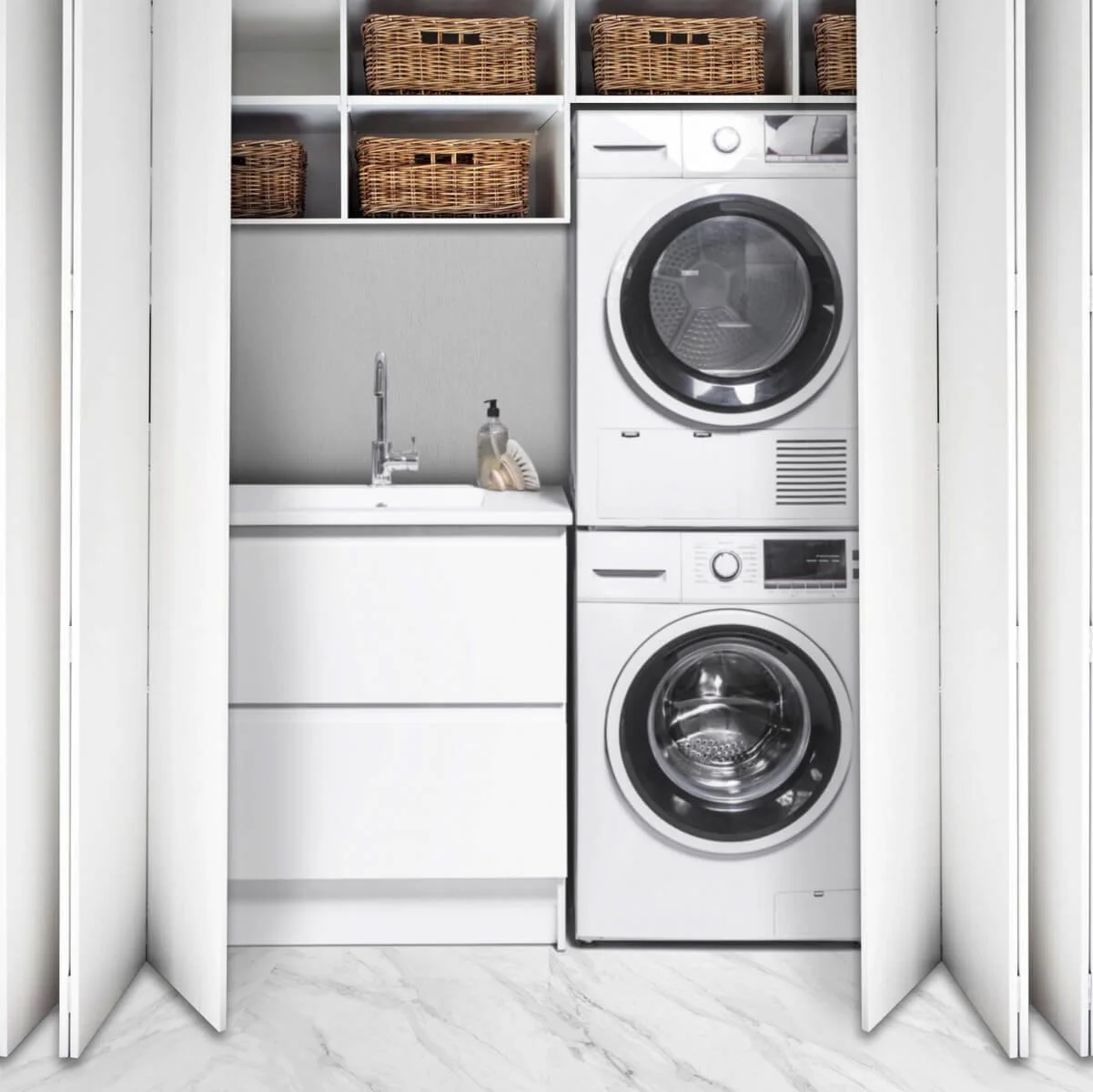
🚪 1. Swap the Swing Door for a Cavity Slider
Traditional doors eat up valuable floor space. Replace yours with a cavity slider to instantly free up the room. In tight laundries, every inch counts—and this one upgrade can transform how you use the space.
👉 Product Tip: Bunnings Cavity Slider Kit (NZ)
🧺 2. Stack It Smart: Washer & Dryer Combos
Stacking your front-loader washing machine and dryer is a classic move—and still one of the smartest for Auckland homes. You’ll save over half a metre of floor space and create room for overhead shelving or a benchtop for folding.
👉 Pro Install Available: Book a free consult with Key Interiors
🧼 3. Pull-Out Hampers & Built-In Sorting
Integrated laundry hampers and slide-out sorting bins are a game-changer. No more plastic baskets taking up the floor—everything's hidden and tidy.
✅ Perfect for families
✅ Minimizes clutter
✅ Can be built into existing cabinetry
🪟 4. Maximise Natural Light
Many Auckland homes have dated laundries with tiny or rotting windows. Replacing with a larger frosted or top-hung window adds brightness and makes the space feel bigger.
💡 Insider Tip: Pair with a soft white colour palette and white Zellige-style tiles to reflect more light.
🛠 5. Use Vertical Storage (Yes, Even Overhead)
Install overhead cupboards or floating shelves above your appliances. Store detergents, towels, and bulk items out of the way but still accessible.
👉 Best brands for Auckland cabinetry:
Designatek
Melteca
Prime Panels
Want them measured and installed? Book here.
🖼 6. Add Style with Finishes that Feel Luxe (But Aren’t Pricey)
Don’t settle for plain white melamine and budget handles. In 2026, affordable luxury is doable.
Try this combo:
Cabinetry: Whitewashed oak melamine
Benchtop: Cool quartz-look laminate
Tapware: Brushed brass or matte black
Splashback: Soft-toned vertical kit-kat or Zellige tiles
These finishes elevate the space—and add resale value without breaking the bank.
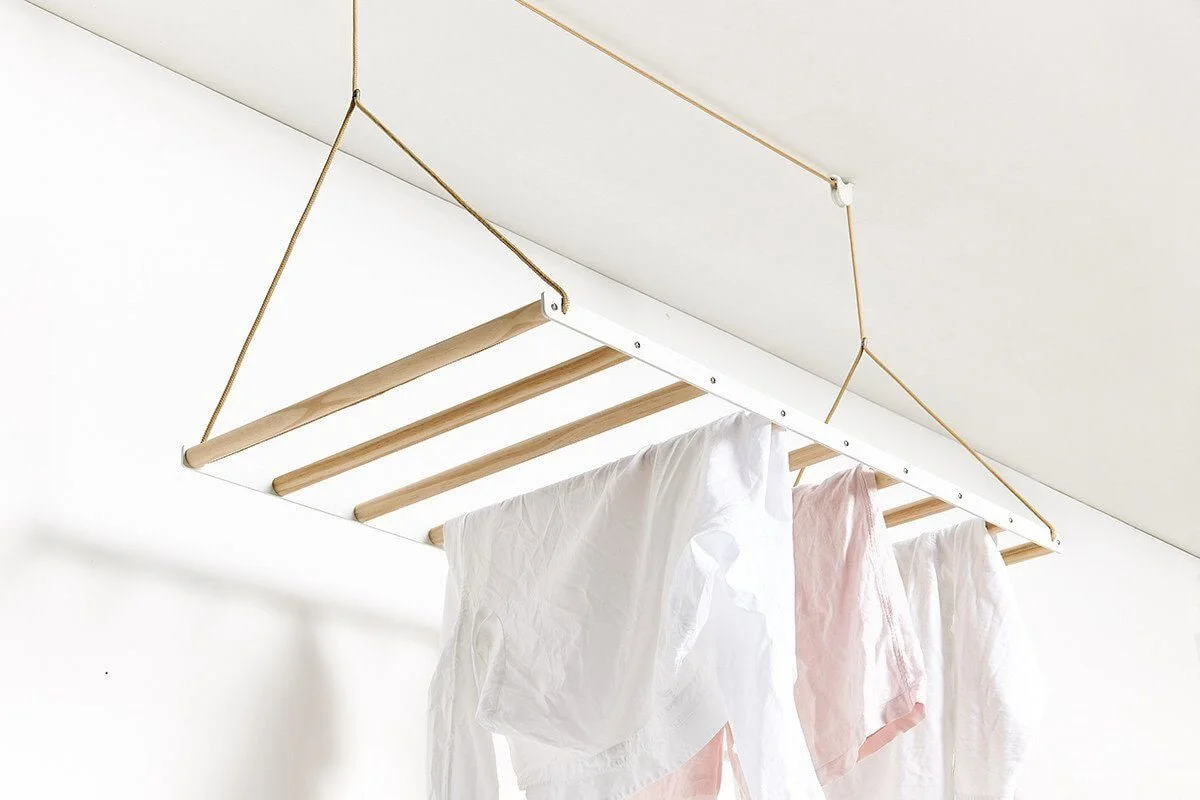
🪄 7. Hidden Laundries Done Right
Living in a villa or apartment? Consider a concealed laundry in a hallway, kitchen, or under the stairs. With proper ventilation and design, they can be sleek and seamless.
👉 We design them all the time—book your free design session here.
Three things decide what is actually possible
Before any of the ideas above, a small laundry is constrained by three services, and knowing where they are tells you what you can do.
Drainage. The washing machine needs a waste, and a standpipe or tub to drain into. Moving that is the expensive change, particularly on a concrete floor.
Ventilation. Somewhere for the moisture to go. This is the one people skip and it is the one that causes the damage.
Power. A dedicated circuit for the machines, and enough capacity if you are adding a dryer to an older Auckland home.
Work with where those already are and a small laundry is affordable. Move them and the budget changes shape. The full numbers are in our Auckland laundry renovation cost guide.
The dryer decision is the most important one in the room
This is the single most common mistake we are called to fix, and in a small or hidden laundry it matters more than anywhere else.
A vented dryer pushes hot, extremely wet air out of the back of the machine. That air has to go outside. Venting it into a cupboard, into the roof space, or just letting it out into a small closed room is how you grow mould on the ceiling, in the roof cavity, and inside the cabinetry. A vented dryer in a sealed cupboard is the worst possible combination, and it is depressingly common.
Your three real options:
Vented, ducted properly to outside. Cheapest machine, and only acceptable if the duct run is short, sealed and actually terminates on an exterior wall.
Condenser. No duct needed. It collects water in a tank you empty, or it can be plumbed to the waste. It still puts some heat and moisture into the room, so ventilation still matters.
Heat pump. The best answer for a small or enclosed laundry in an Auckland home. Far more efficient to run, gentler on clothes, no duct, and minimal moisture released into the room. More expensive to buy and slower per cycle, and it still needs its tank emptied or a drain connection. If you are building a laundry into a cupboard, this is the one to specify.
Whichever you choose, the room still needs either an extractor ducted outside or an openable window. A laundry is a wet room; treat it like one.
The measurements that actually matter
Standard front loader: about 600mm wide and 600 to 650mm deep, but allow 650 to 700mm of depth once hoses and the power connection sit behind it. Cabinets built to exactly 600mm are why machines end up sticking out past the bench.
Stacked washer and dryer typically reaches 1700 to 1800mm. Check you can still reach the dryer controls and the top of the door opening.
Front loader doors swing wide, often 500 to 600mm out. Check the swing against the opposite wall, the door, and each other if the machines sit side by side.
Bench over the machines: allow at least 20 to 30mm clearance above so the machine is not in contact with the underside. Front loaders vibrate hard on spin, and a bench resting on one turns the whole room into a drum.
Working bench: even 600mm of folding space changes how usable the room is. It is the most requested thing after storage.
Stacked, side by side, or a combo?
Stacked is almost always right in a small laundry. It halves the footprint and frees a whole run for storage or bench. Use a proper stacking kit rather than balancing one on the other.
Side by side only earns its place if you have the width and you want continuous bench over the top, which is genuinely lovely if the room allows.
A washer-dryer combo in one machine sounds like the perfect small-space answer and usually is not. Drying capacity is typically about half the washing capacity, cycles are long, and when it fails you lose both functions at once. It makes sense in an apartment with truly no alternative. In a house, stacked separates are better.
If it is going in a cupboard, do these five things
A hidden laundry is excellent when it is done properly and miserable when it is not. The difference:
Ventilate the cupboard itself, with a vented door, a grille, or a gap. A sealed cabinet full of warm damp air grows mould on the carcass.
Use a heat pump or condenser dryer, not a vented one.
Moisture-resistant carcass material, not standard board. Standard MDF swells permanently the first time it gets wet and cannot be repaired.
Light inside the cupboard. Obvious once you have lived without it.
Think about noise. A laundry cupboard in a hallway next to a bedroom will be heard. Bifold or cavity doors, and consider where the spin cycle will be running at 10pm.
Plan for the day a hose lets go
Washing machine hose failures are one of the most common domestic water damage claims there is, and in a small enclosed laundry the water has nowhere to go but into the floor and the adjoining rooms.
A floor waste if the floor construction allows it. Cheap insurance.
Braided stainless hoses, replaced periodically rather than left for fifteen years.
Accessible isolating taps you can actually reach without pulling the machine out, and turn off when you go away.
A drip tray under the machine in an upstairs or cupboard laundry.
Waterproof flooring and sealed junctions, especially where the laundry sits over living space.
Villa and bungalow laundries
Character homes rarely came with a laundry inside. It was usually a wash-house out the back, under the house, or in a lean-to, which creates a specific set of problems:
It is cold, and often uninsulated, so it is the room in the house most likely to grow mould. Ventilation and a heat pump dryer matter more here than anywhere.
Bringing it inside usually means new drainage and a new power circuit, which is the real cost of the project.
The floor is often out of level after a century of pile movement, which matters for both cabinetry and machine stability.
Spare width is nonexistent. High ceilings are the opportunity, so take storage up the wall rather than out into the room.
Nothing is square, so cabinetry has to be scribed to fit. See our villa renovation guide.
A small laundry done properly in Auckland generally sits in the $10,000 to $20,000 range, with higher-end fit-outs running to $40,000. Small does not mean cheap, because the plumbing, electrical and joinery costs barely change with floor area. See our laundry renovation service, or get a tailored range from the free estimator.
💸 Bonus Tip: Budgeting for a Small Laundry Reno in 2026
In Auckland, a well-done small laundry renovation usually costs $12,000–$25,000+ depending on layout, joinery, and materials. We can tailor solutions for any size and budget.
Four small Auckland laundries we've built
Rarangi Road, St Heliers — a full strip-out and rebuild.
Beresford Street, Bayswater — demolished and rebuilt, keeping the original floor.
Seymour Street, St Marys Bay — a villa laundry, with everything that comes with a character home.
Merani Street, Belmont — a laundry and bathroom sharing one room.
Between them they cover most of what a small Auckland laundry throws at you: no width, no bench, awkward door swings and services that were never designed to be there. More in our before and afters.
🔧 Need Help Designing Yours?
Whether you want a hidden laundry, a villa-friendly redesign, or a compact family setup—we can help. Book a free design consult below and let’s create something that actually works.
👉 Book Your Free Design Consult
📍 Serving Auckland-wide
💬 Visit Our Website