
Renovating a character villa in Auckland? Here's how to modernise while retaining original charm.
Auckland’s villas are full of character—but renovating them is a delicate balancing act. The goal? Create a modern, functional home while preserving the features that make villas so special.
At Key Interiors, we’ve renovated dozens of villas across Ponsonby, Grey Lynn, Mt Eden and beyond. Here’s how we help homeowners blend heritage with modern living—without losing the soul of the home.
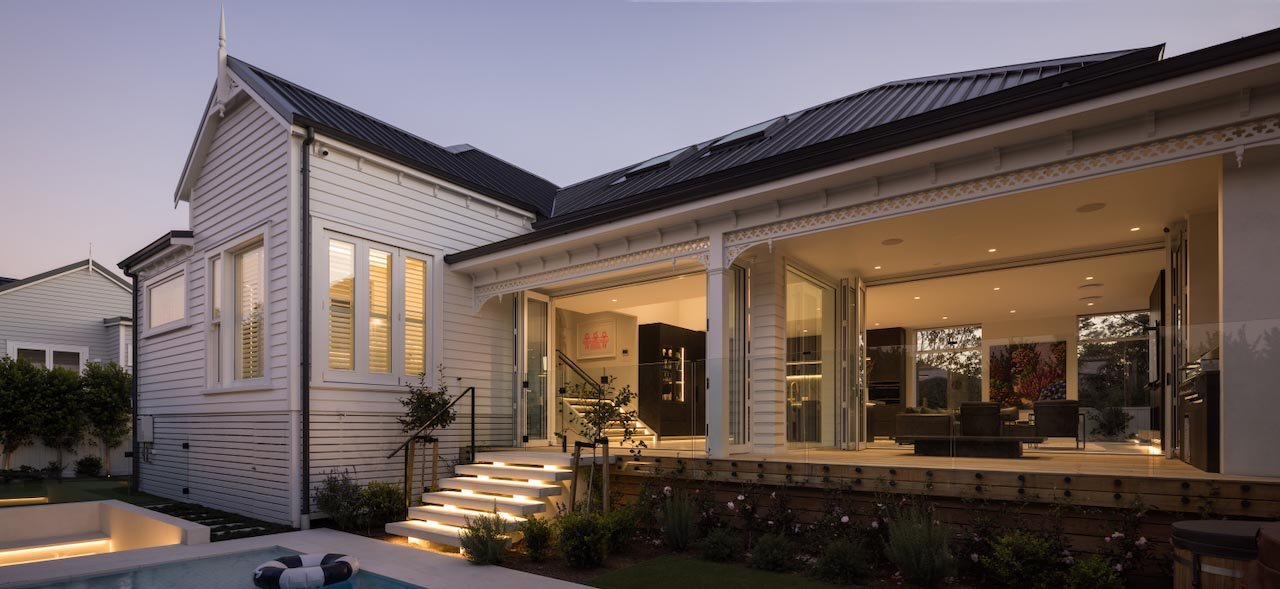
🏛️ What Makes Auckland Villas Unique?
Built in the early 1900s, villas are known for their:
Timber floors and high stud ceilings
Decorative ceiling roses and cornices
Central hallways with symmetrical room layouts
Double-hung windows and weatherboard cladding
But while charming, these homes often need major updates to meet modern standards.
✨ How to Modernise a Villa—The Right Way
1. Restore Where It Matters
Original timber floors, ceiling roses, and sash windows can be sanded, reglazed, or repaired to retain their historic value.
Tip: Don’t rip out what gives your villa character. Restored floorboards and plaster detailing add texture and authenticity that new builds can’t replicate.
2. Rework the Layout Thoughtfully
Villas weren’t built with open-plan living in mind. We often reconfigure the rear of the home—removing walls or adding a pavilion extension—to create flow from kitchen to living to outdoors.
Tip: Keep the front rooms traditional and open up the back for contemporary living. This contrast celebrates the best of both eras.
3. Add Subtle Modern Touches
Incorporate minimalistic cabinetry, stone benchtops, and flush LED lighting to bring a fresh look without clashing with the original detailing.
Tip: Use soft, warm tones and brushed finishes to complement character features—think whitewashed oak, aged brass, or creamy quartz.
4. Upgrade Services Invisibly
Most villas need full rewiring, plumbing upgrades, and insulation. We run new services behind walls and beneath floors to preserve the aesthetic.
Tip: Choose underfloor heating or ducted systems for comfort without visual clutter.
📸 Before & After: See the Transformation
From dated to dreamy—see how we’ve transformed Auckland villas with clever layout changes and subtle styling.
👉 Coming soon: full gallery of villa renovation before & afters.
🔨 Thinking Bigger? Explore Our Full Home Renovation Services
Whether it’s just the kitchen and bathroom or a full house transformation, we manage every step—from design to delivery.
Working with a villa? Here’s what a villa renovation actually involves, start to finish.
Villa or bungalow? They are not the same renovation
People use the words interchangeably and then get advice that doesn't fit their house. The difference matters, because it changes the layout strategy, the consent position and the budget.
An Auckland villa is roughly 1880s to 1915. Central hallway with rooms off both sides, a lean-to tacked on the back, tall ceilings often over 3 metres, double-hung sash windows with weights, and frequently single-skin walls in the original rooms. The usual job is to open up the rear and leave the formal front rooms alone.
A bungalow is roughly 1915 to 1940. Wider and shallower, more open from the start, lower ceilings around 2.7 metres with far more timber detail, casement windows often with leadlight, and more often framed with a proper wall cavity. The usual job is to reconfigure the middle of the house and extend towards the garden.
The villa's central hallway is the thing that defines the whole project. Everything hangs off whether you keep it, shorten it, or open the back of the house into one space and let the hallway serve only the bedrooms.
Check your character overlay before you fall in love with a plan
This is the single most expensive thing Auckland villa owners find out too late.
Large parts of the isthmus sit inside a Special Character Area under the Auckland Unitary Plan. Ponsonby, Grey Lynn, Westmere, Mt Eden, Kingsland, Arch Hill, Devonport, Northcote Point and plenty more. Inside those overlays, what you can do to the street-facing part of an older house is controlled, and removing or substantially altering it usually needs resource consent on top of your building consent.
A separate and stricter layer applies to individually scheduled heritage buildings. Very few houses are scheduled, but if yours is, the rules are a different conversation entirely.
What this means in practice:
The front of the house is usually the protected part. Roof form, facade, verandah, windows, the bay. The rear and the interior are typically far more flexible, which is exactly why the standard Auckland villa renovation opens up the back and leaves the street frontage alone.
Removing a chimney, changing window joinery or reroofing can all be caught by an overlay even though they feel cosmetic.
Resource consent is time, not just money. It runs alongside building consent and it can add months, so it needs to be in the programme from day one rather than discovered at design stage.
Check it yourself in five minutes. Search your address on Auckland Council's GeoMaps and turn on the planning layers, and order the property file while you're at it. Do that before you commission a design, not after. For the wider consent picture, read do I need council consent to renovate in Auckland.
What's actually behind the walls of a 110-year-old house
Villas are beautifully built, and they have been through a century of other people's decisions. These are the things that turn up on nearly every job, and the reason a villa costs more per square metre than a 1990s house.
Single-skin walls. In many original villa rooms there is no wall cavity at all: the rusticated weatherboard outside is the structure, with scrim and wallpaper straight onto the inside face. There is nowhere to put insulation without either battening out internally, which loses room width and can bury the architraves, or taking the exterior cladding off. Either way it is a real cost and a real design decision, not a tick-box.
Piles. Original piles are often totara or matai, and a century of Auckland clay moving under them leaves floors visibly out of level. Relevelling and replacing piles is common, and it wants doing before new kitchens, tiling or joinery go in. Do it after and you will crack the very thing you just paid for.
Borer and rot. Borer in floorboards and framing, and rot wherever water has been getting in around the bathroom or the back lean-to.
Lead paint. Anything painted before the late 1970s should be assumed to contain lead. It matters most when sanding or stripping, and it is a health issue rather than a formality.
Asbestos. Not in the original 1900s fabric, but very commonly in the 1940s to 1980s work done to it: vinyl floor tiles and their glue, textured ceilings, old lining boards, eaves soffits. Testing before demolition is standard and it is not expensive.
The wiring. Rubber-insulated cabling from mid-century perishes. If your switchboard still has ceramic fuses, a full rewire is likely, and it is far cheaper while the linings are already off.
The drains. Original earthenware gully traps and drains crack and get root damage. A camera survey early is cheap insurance.
None of this is a reason not to renovate a villa. It is a reason to have it all found and priced before the contract is signed, rather than discovered as variations once the walls are open.
Insulating a villa without creating a moisture problem
Worth its own section, because the instinct is to seal everything up and that can make a villa worse.
These houses were built to breathe. They have subfloor ventilation, gaps, and no vapour barriers, and moisture that gets in has always been able to get back out. Wrap that up tightly with modern materials and no ventilation strategy and you move the condensation somewhere you cannot see it.
What works, in order: insulate the ceiling first, since that is where most heat is lost and it is the easiest win. Insulate under the floor and lay a ground vapour barrier. Deal with the walls properly when the linings are off anyway, so it can be detailed correctly rather than stuffed in. Then give the house mechanical extraction in the wet rooms and a way to ventilate, so the moisture you generate every day has somewhere to go. Getting that order right matters more than the R-value printed on the bag.
Restore, replace, or let it go
Not everything old is worth saving, and not everything is worth saving at any price. Roughly how we think about it:
Almost always restore: kauri floorboards, original architraves and skirtings, ceiling roses and cornices, leadlight, the front door, the verandah detailing. This is the character you paid a villa premium for, and a modern copy never quite reads right.
Usually worth repairing: double-hung sashes. They can be drawn out, re-corded, draught-sealed, and in many cases fitted with slim double-glazed units. Repairing original joinery is often a better outcome than swapping it for aluminium, and inside a character overlay it may be your only option.
Usually replace: the 1970s aluminium windows someone put in the back, the lean-to bathroom, the kitchen, and all the services. Nobody is preserving those.
Where the money actually goes
Auckland full renovations run roughly $1,000 to $1,600 per square metre for a cosmetic refresh, $1,700 to $2,700 for a genuine full renovation, and $2,900 to $4,200 for premium architectural work. A villa sits at the upper end of whichever band you are in, and the reason is almost never the visible finishes.
It is the piles, the rewire, the re-plumb, the insulation strategy, the structural work to open up the back, and the making-good around original detail that a straight-walled modern house simply does not need. The full numbers, room by room, are in our full home renovation cost guide, and if you are opening up the rear you will want removing a load-bearing wall in Auckland as well.
The order that keeps a villa job out of trouble
Check the overlay and order the property file. Before design, not after.
Get the house investigated. Subfloor, piles, a drain camera survey, asbestos and lead testing, and a look at the switchboard.
Design around what you found, rather than around a plan drawn before anyone crawled underneath.
Consents. Resource consent first if the overlay requires it, then building consent.
Structure and services. Relevel, reframe, rewire, re-plumb, insulate.
Linings, then finishes, then joinery.
The single most common villa renovation mistake is doing step five after step six, because the kitchen was exciting and the piles were not.
See how this plays out on real Auckland houses in our before and afters, or read more about how we approach villa renovations and bungalow renovations.
Two Auckland villas we've done
Garfield Street, Parnell — villa bathroom. A single bathroom reworked with a built-in laundry, in a Parnell villa. The classic character-home problem: one wet room at the back of the house doing two jobs, on a floor that had moved.
Seymour Street, St Marys Bay — villa laundry. A full strip-out and rebuild of a villa laundry, in one of Auckland's oldest character streets.
Both show what the sections above describe: the lean-to at the back, the floor that needed levelling before anything else, and cabinetry scribed to walls that are nowhere near square. More finished work in our projects.
Frequently Asked Questions
Can you renovate a villa without losing its charm?
Absolutely. The key is knowing what to preserve and where to modernise. We keep original features like floorboards and ceiling roses, and blend them with sleek, functional updates.
Do villa renovations take longer than standard homes?
Yes, often. There can be surprises behind the walls—old wiring, borer damage, or sloping floors. But with the right planning, it’s completely manageable.
Can I open up the back of a villa for better flow?
Definitely. Many of our villa projects involve opening up the rear of the home to create open-plan living with indoor-outdoor flow—while keeping the front rooms intact.
What’s the best flooring for a villa renovation?
Restored original timber is unbeatable for charm. If it’s beyond repair, wide board oak in a whitewashed or smoked finish is a beautiful and authentic alternative.
Will a villa renovation increase my home's value?
Yes. Renovated villas are in high demand across Auckland. Buyers love the mix of character and modern comfort—when it’s done right.