
Thinking about renovating your laundry in 2026? Whether you're in a classic villa or a modern townhouse, laundry rooms are finally getting the design love they deserve. Gone are the days of plain white melamine and clunky appliances—this year is all about elevated utility, soft textures, and stylish finishes.
Here are the top laundry design trends making waves across New Zealand homes (and yes, they’re actually practical too).
🪵 1. Whitewashed Oak Cabinetry
Say goodbye to boring flat white cabinets. In 2026, whitewashed or limed oak is the go-to cabinetry finish for laundries. It’s warm, timeless, and adds texture without overwhelming the space.
✨ Where we source from: Designatek NZ and Melteca Panels offer durable, moisture-resistant panels perfect for laundry use.
🔶 2. Brushed Brass Tapware & Hardware
The brushed brass look is no longer just for bathrooms and kitchens. In laundry rooms, it pairs beautifully with natural materials and adds a luxe detail that clients love.
✅ Works perfectly with both warm and cool tones
✅ Matches ABI Interiors' gooseneck taps, pull-out mixers & hardware range
👉 View ABI’s laundry collection:ABI Interiors NZ – Laundry Tapware
🧼 3. Hidden Appliance Design
2026 is all about clean lines and hidden functionality. We’re seeing more projects include:
Integrated washer/dryer units behind cabinetry doors
Pull-out hampers and foldaway ironing boards
Concealed upper cupboards for detergent and clutter
This works especially well in villas and smaller homes where laundry may be open to a hallway or kitchen.
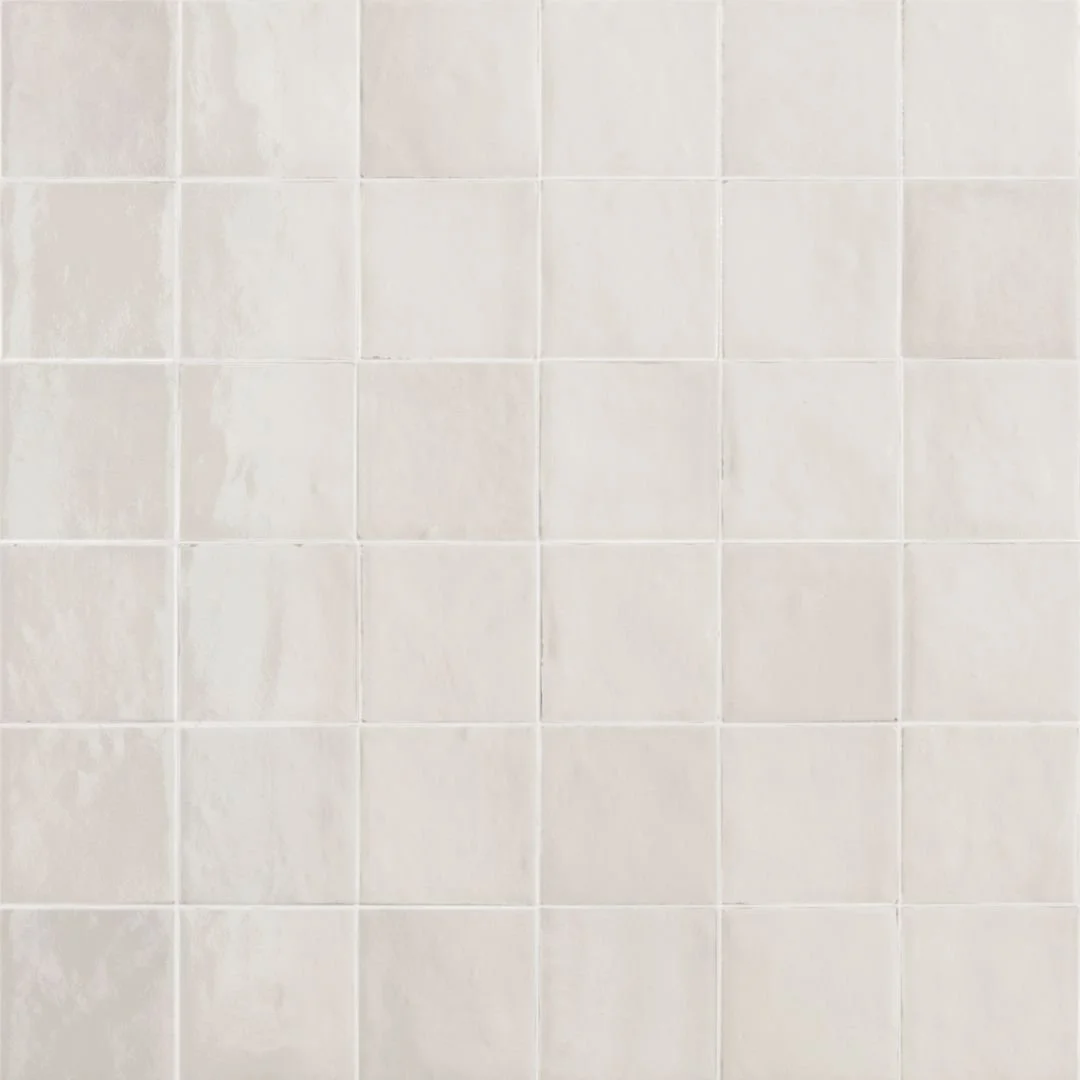
🟩 4. Soft Zellige & Kit-Kat Tile Splashbacks
Backsplashes aren’t just functional—they’re a style statement.
Trending in NZ right now:
Zellige-style tiles in soft white, cream, or greenish undertones
Vertical kit-kat mosaics to create height and visual interest
Paired with subtle grout to keep things clean and fresh
💡 Tip: Add overhead LED strip lighting to highlight the tile texture.
🧺 5. Laundry + Mudroom Combos
Especially common in Auckland villas and large renos, combining your laundry with a mudroom creates a multi-functional space that’s both beautiful and useful. We love:
Bench seating with cubbies for shoes
Wall hooks for school bags
Hidden cabinets for cleaning supplies and linen
📍 We design and install these combos across the Auckland region—book a free consult.
🪞 6. Floor-to-Ceiling Cabinet Walls
If your laundry is narrow, go vertical.
In 2026, smart laundries feature:
Full-height cabinetry for tall broom storage
Overhead closed cupboards above appliances
Flush, handleless finishes for a modern, minimal look
🛠 Cabinet systems from Designatek or Melteca are moisture-resistant and long-wearing—great for Auckland humidity.
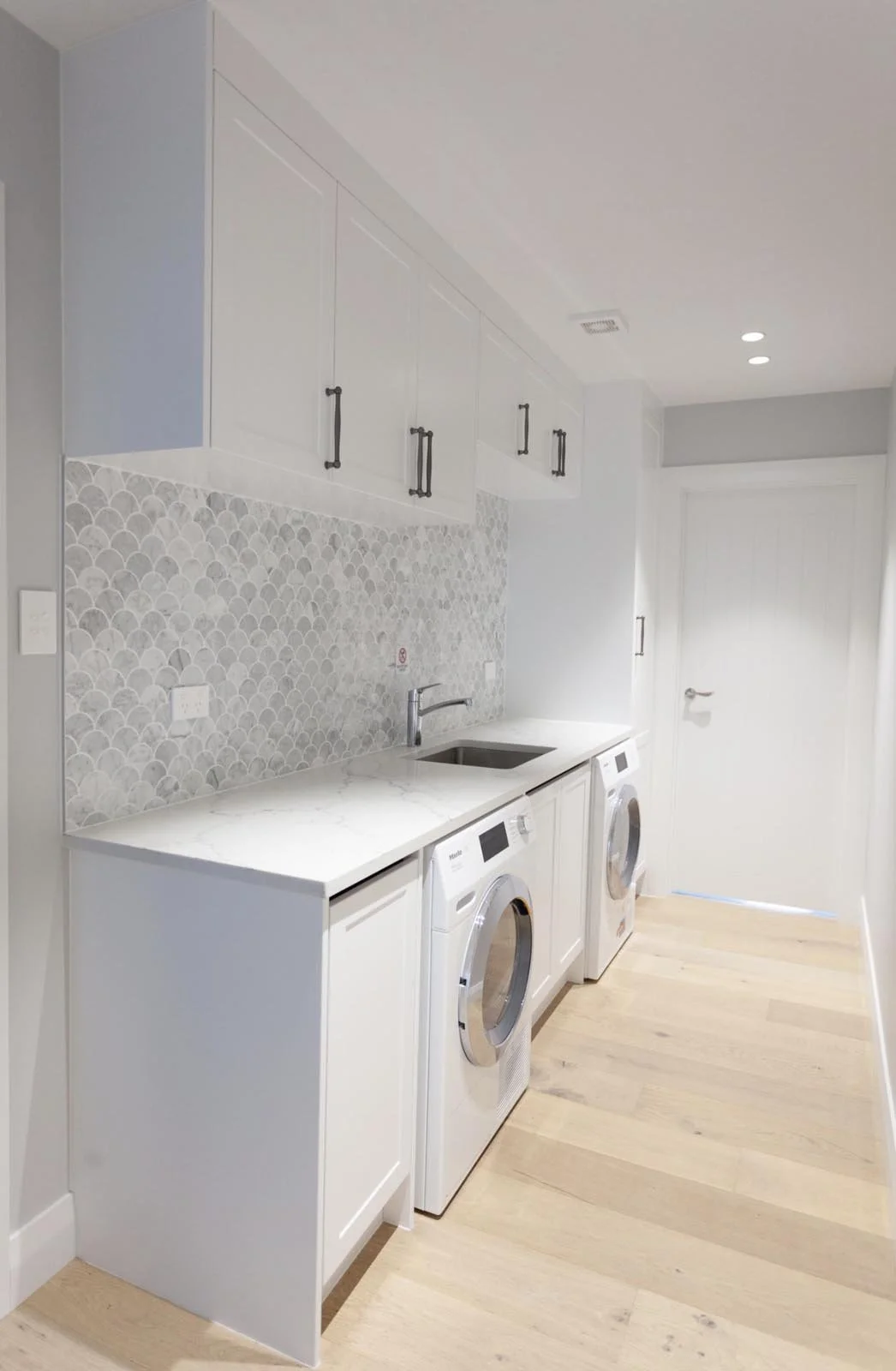
🌿 7. Natural Colour Palettes
NZ homeowners are embracing calm, layered palettes in 2026. Think:
Soft putty and clay tones
Cool quartz benchtops
Light green or blue-grey accents
Mixed metal finishes (brass + black)
🧠 Bonus: These colours photograph beautifully for real estate resale and help make laundries feel more spacious.
Why the laundry suddenly got a design budget
For decades the laundry was a wash-house out the back with a tub and a bare bulb. It has been promoted, and there are two practical reasons rather than purely aesthetic ones.
Open-plan living made it visible. Once the back of the house became one connected space, the laundry could no longer be a door you kept shut. It either got designed properly or it got hidden properly, and both cost money.
Houses got busier at the back door. The laundry is now where bags, shoes, coats, sports gear and the dog arrive. It has absorbed the mudroom job, which is why the trend list above features storage walls and drop zones rather than just nicer tiles.
The trend that matters most in New Zealand: somewhere to dry clothes
This is the one nobody puts on a trend list, and it is the single biggest unmet need in NZ laundries.
Most of us dry washing indoors for a good part of the year. A single load of wet washing releases a couple of litres of water into the air of your house as it dries. Do that on a clothes horse in the lounge through an Auckland winter and you are running a humidifier in a cold house, which is exactly how you get condensation on the windows and mould in the wardrobes.
So the genuinely useful version of a modern laundry includes a designed place for wet washing to dry, that is ventilated to outside. Options worth knowing:
A heat pump dryer. Efficient, gentle on clothes, no duct, and it takes the moisture out of the clothes rather than releasing it into the room. For most Auckland homes this is the single best appliance upgrade available.
A drying cabinet or heated drying cupboard, extracted to outside. Excellent for things you would not tumble dry, and increasingly requested.
A ceiling-mounted or pull-down airer in a room with real extraction, rather than a clothes horse in the living room.
A heated towel rail in the laundry, which is a cheap and surprisingly effective drying rack.
Whatever you choose, the room needs an extractor ducted outside or an openable window. A laundry is a wet room and the moisture has to leave the building.
Which of the trends above actually earn their keep
Worth the money, because they change how the room works:
Floor-to-ceiling cabinetry. The laundry holds detergents, cleaning gear, spare linen, light bulbs and the vacuum. Closed storage to the ceiling is the difference between a calm room and a cluttered one, and it is the best-value thing on the list.
Hidden appliances behind cabinetry. Genuinely transformative in an open-plan home, provided the cupboard is ventilated and the carcass is moisture-resistant.
The mudroom combo. A bench to sit on, hooks at child height, a shoe drawer and a spot for the dog bowl. This is the highest-use square metre in a lot of family homes.
A proper bench to fold on. Even 600mm. Without it, folding happens on a bed somewhere else and the laundry never actually finishes.
A deep single tub. For soaking, hand washing and filling buckets. Laundry tubs got shallower and more stylish and lost the plot; depth is the useful property.
Purely aesthetic, which is fine as long as you know: brushed brass hardware, zellige and kit-kat splashbacks, and colour on the joinery. These make the room lovely and change nothing about how it works. They also sit in the cheap-to-change layer, which is exactly where trend-led choices belong.
What dates a laundry fastest
Open shelving with visible detergent bottles. Beautiful in a styled photograph, chaotic within a fortnight.
Standard MDF carcasses, which swell permanently the first time water gets into them. In a laundry this is not a maybe.
A vented dryer in a closed cupboard. Not a style issue, but it will visibly destroy the room and the ceiling above it.
Very pale grout on the floor, in the room where muddy boots and pets arrive.
A shallow designer tub you cannot actually soak anything in.
Matte black tapware in a room with constant water contact, which shows marks more than brushed finishes.
Materials, because a laundry is harsher than a kitchen
People specify laundry joinery like kitchen joinery. It takes more abuse: standing water, detergent, bleach, and constant humidity.
Moisture-resistant board for every carcass, without exception.
Thicker edge banding, because this is where water sits and lifts it.
A hard-wearing benchtop. Laminate is entirely sensible here, and so is stainless if you want something bulletproof over the machines. Avoid anything porous that needs sealing near a tub.
Waterproof flooring with sealed junctions, and a floor waste if the construction allows it.
Wipeable satin paint, not matte, and a mould-inhibiting product if the room is cold.
Making it suit a villa or bungalow
Character homes did not come with an internal laundry, so it is usually a newer intervention in an old house, and it is easy to make it feel bolted on.
What sits well: timber tones, warm neutrals, a deep colour on joinery against high ceilings, tongue-and-groove or panelled cabinet doors that echo the era, and taking cabinetry to the full stud height rather than stopping at a modern 2.1m.
What fights the house: very high-gloss slab doors and dropped bulkheads that cut the ceiling height down.
Practically, bringing a wash-house laundry inside usually means new drainage and a new power circuit, and the floor will likely need levelling before cabinetry. Those are the real costs, not the tapware. Our villa renovation guide covers what turns up in older homes.
Where to spend
Spend on: the dryer, ventilation, moisture-resistant joinery, and storage. All four are either invisible or boring, and all four are what make the room still good in ten years.
Hold back on: statement tapware, feature tile, and anything else you could change in an afternoon for a few hundred dollars.
An Auckland laundry renovation generally runs $10,000 to $20,000 for a proper mid-range fit-out, with premium projects reaching $40,000. The detail is in our laundry renovation cost guide, and the practical small-space version is in small laundry room ideas that actually work.
👇 Final Thoughts: Stylish + Functional Wins in 2026
Trends are only worth following if they make your life easier. The top NZ laundry designs for 2026 do both—they look amazing and work hard behind the scenes.
🎯 Want to bring these looks to life in your own home?
We’ll help you design a laundry that’s not just trendy—but tailor-made for your space, lifestyle, and budget.
👉 Book a Free Laundry Design Consult Now
📍 Available across Auckland
💬 Visit Our Website