Butler’s Pantry vs Scullery in NZ: Costs, Ideas & Is It Worth It?
Ask any Auckland kitchen designer what homeowners request most right now, and a scullery or butler's pantry will be near the top of the list. The appeal is simple: a beautiful, uncluttered "show" kitchen out front, and a hard-working space just behind it where the mess, the mixer and the washing-up quietly disappear. But before you commit, it helps to know what a butler's pantry costs in NZ in 2026, how a scullery differs, and whether the space you'd give up is worth it. This guide breaks it all down with real Auckland context, indicative pricing and practical design advice.
Scullery vs butler's pantry: what's the difference?
The two terms get used interchangeably, but they aren't quite the same thing — and knowing which one you actually want changes both the design and the budget.
Butler's pantry (the "dry" store)
A butler's pantry is primarily a storage and staging space. Think floor-to-ceiling cabinetry, open shelving, a benchtop for landing groceries and small appliances, and room to keep the toaster, coffee machine and everyday clutter out of sight. It's usually a "dry" room — no plumbing — which keeps it simpler and cheaper to build.
Scullery (the "wet", working room)
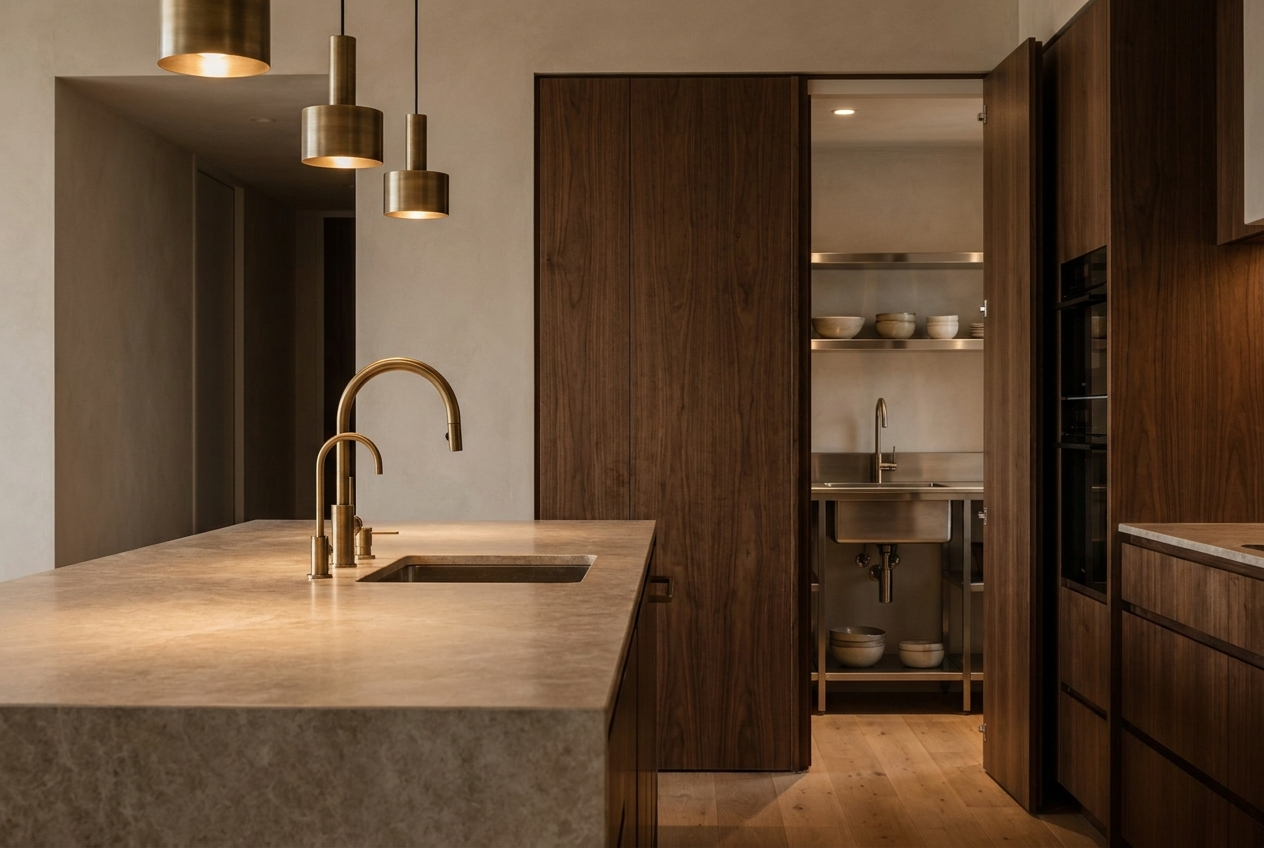
A scullery goes a step further. It's effectively a second, working kitchen: a run of bench, a sink (often the main sink, so dishes never touch the show kitchen), sometimes a second dishwasher, and prep space you can leave mid-mess. Because it involves plumbing and often extra appliances, a scullery costs more than a straight butler's pantry — but for busy households and keen entertainers, it's the one people rarely regret.
In practice, many Auckland renovations blend the two: a walk-in space with a sink and dishwasher at one end and dry pantry storage at the other. What you call it matters less than getting the mix right for how your household actually cooks.
Why Auckland homeowners keep asking for one
A hidden scullery or butler's pantry has quietly become an expectation in mid-range and premium NZ homes, and it's easy to see why. Open-plan living means the kitchen is on show whenever guests are over, so a space that hides the dish pile and the appliance jumble is genuinely useful, not just aspirational. It also protects your investment in a stunning main kitchen — the honed stone island stays pristine because the real work happens next door.
There's a practical resale angle too. In Auckland's competitive market, a well-designed scullery is a feature buyers notice and value, particularly in family homes and higher-end suburbs. Done well, it's one of the upgrades that adds the most usable value per dollar in a kitchen renovation.
How much does a butler's pantry or scullery cost in NZ?
Cost depends almost entirely on scope — whether it's a dry store or a plumbed working room, how big it is, and the quality of the cabinetry and appliances. The figures below are indicative 2026 ranges, include GST, and vary with your specific project. Treat them as a starting point, not a quote.
Simple butler's pantry (dry): from around $6,000–$12,000. This covers cabinetry, shelving and a benchtop in a modest space with no plumbing — essentially high-quality joinery and a work surface.
Mid-range scullery: roughly $12,000–$25,000. Adds a second sink and tapware, benchtop, more cabinetry, and the plumbing and electrical to support it. This is where most Auckland sculleries land.
Large or high-end scullery: $25,000–$40,000+. Full custom cabinetry, a second dishwasher, integrated appliances, premium benchtops, and a generous walk-in footprint, often as part of a wider layout change.
Because a scullery is essentially a mini-kitchen, the same cost drivers apply as in the main room. As a rough guide, cabinetry and joinery are typically the biggest slice of a kitchen budget, and a scullery is no different. If you're pricing a full kitchen with a scullery included rather than as a standalone add-on, our guide to kitchen renovation costs in Auckland sets out where the money goes across the whole project.
What pushes the cost up or down
Plumbing: adding a sink and dishwasher means water, waste and (usually) a licensed plumber. Keeping the scullery on a wall that already has services is far cheaper than running new pipework across the house.
Cabinetry quality: flat-pack or melamine keeps things lean; NZ-made custom joinery with soft-close hardware and timber or two-pot finishes costs more but lasts and looks the part.
Appliances: a second dishwasher, wall oven or bar fridge each add to the bill. Many households happily keep the scullery appliance-light and use it mainly for prep and clean-up.
Size and structural change: borrowing space from an adjacent room, moving a wall, or adding a doorway all add cost — and may need a building consent from Auckland Council.
Scullery and butler's pantry design ideas that work
The best sculleries are as considered as the main kitchen, just more hard-wearing. A few ideas we return to again and again:
A concealed entry. A cavity slider or a full-height cabinetry door lets you close the scullery off completely when guests arrive — the mess vanishes behind a seamless wall of joinery.
Bench-height matched to the main kitchen so appliances and prep flow between the two spaces without a step or awkward gap.
Deep open shelving near the door for everyday items you grab constantly, with closed cabinetry lower down for the appliances and clutter you'd rather hide.
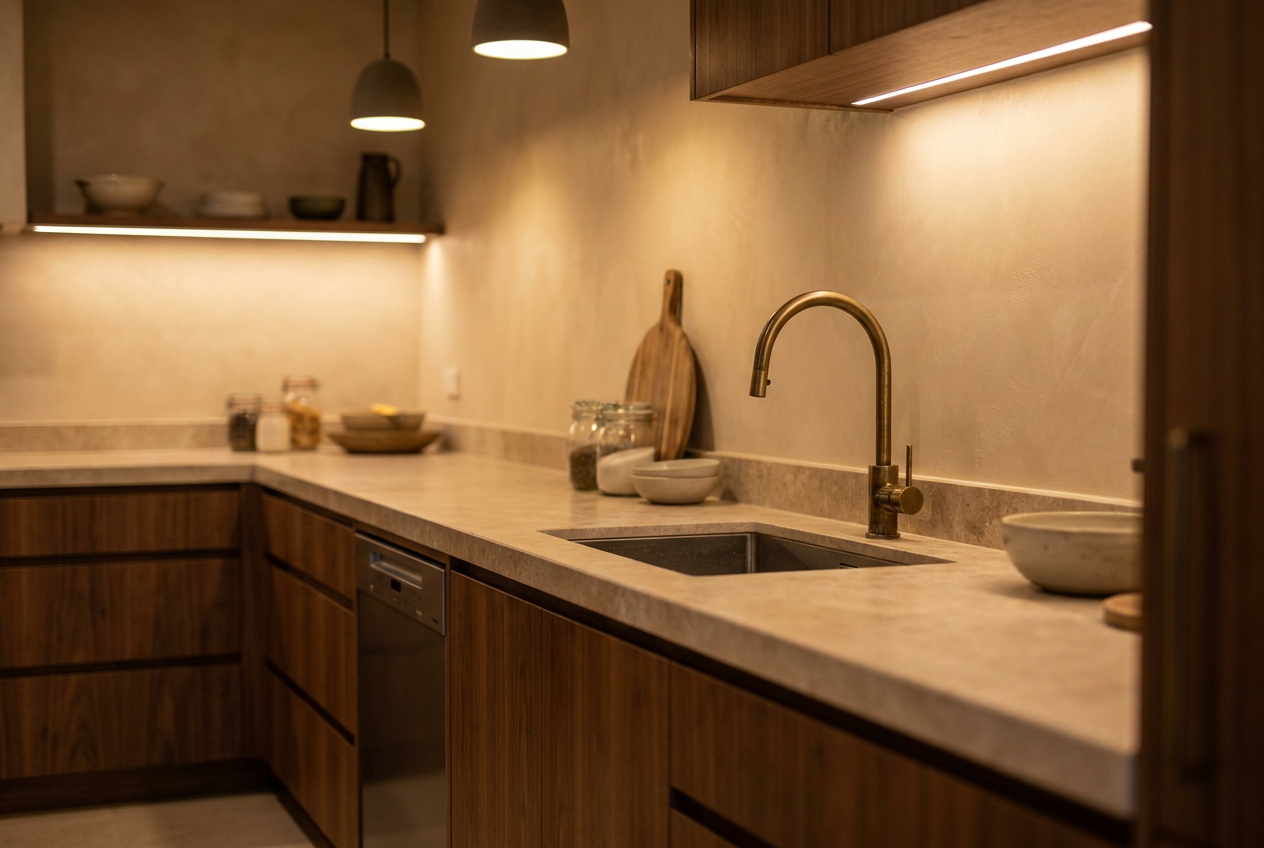
Durable, easy-clean surfaces. The scullery is where the real work happens, so laminate or a hard-wearing engineered stone benchtop earns its place. You can save here and splurge on the show kitchen.
Good lighting and ventilation. It's a working room — under-shelf LED strips and, if you're cooking in there, extraction make it genuinely usable rather than a dark cupboard.
Bespoke custom joinery tailored to the exact appliances and gear you own, so nothing is wasted and everything has a home.
Do you have room for one?
You don't need a mansion, but you do need to be honest about space. As a rough guide, a functional walk-in scullery wants around 1.4–2m of clear width so you can open drawers and stand comfortably, plus a benchtop run of at least a metre or two. A galley layout — bench down one or both sides with a walkway between — is the most space-efficient.
If a full walk-in scullery won't fit, a working pantry built into the main kitchen is the smart alternative that's gaining ground in NZ: a tall cabinet with a bench inside and bi-fold or pocket doors that open for use and close to hide everything. It captures much of the benefit without borrowing a whole room.
Is a scullery worth it?
For most households that entertain, cook a lot, or simply hate looking at dishes, yes — a well-designed scullery is one of the highest-satisfaction upgrades in a kitchen renovation. It keeps the main kitchen looking immaculate, adds serious storage and prep capacity, and appeals to buyers if you sell down the track.
The honest caveat: it uses floor area, and it adds cost. If your home is tight on space or your budget is fully committed to the main kitchen, a working pantry or a generous run of tall cabinetry may serve you better. The right answer depends on your home and how you live in it — which is exactly the kind of thing worth talking through before you lock in a layout.
Frequently asked questions
What's the difference between a scullery and a butler's pantry?
A butler's pantry is mainly dry storage and staging — cabinetry, shelving and bench space with no plumbing. A scullery is a working room with a sink and often a dishwasher, acting as a second kitchen. Many NZ homes combine both in one walk-in space.
How much does a scullery cost in NZ?
Indicatively, a simple dry butler's pantry starts around $6,000–$12,000, a mid-range plumbed scullery runs roughly $12,000–$25,000, and a large or high-end scullery can be $25,000–$40,000 or more. All figures include GST and vary with size, cabinetry and appliances. For a figure tailored to your project, use our renovation estimator.
Do I need council consent for a scullery?
If you're simply fitting cabinetry into an existing space, usually not. But moving plumbing, adding new drainage, or removing a wall to create the room can trigger a building consent from Auckland Council. A design-build team can tell you early whether consent applies.
How much space does a scullery need?
Aim for around 1.4–2m of clear width for a comfortable walk-in, plus a benchtop run of a metre or more. If that's not achievable, a working pantry built into the main kitchen is a great space-saving alternative.
Does a scullery add value to my home?
In Auckland's market, a well-designed scullery is a feature buyers notice, especially in family and higher-end homes. It won't guarantee a specific dollar return, but as a usable, everyday upgrade it's one of the better-value additions to a kitchen renovation.
Planning a kitchen with a scullery?
A scullery or butler's pantry is one of those features that's easy to get wrong on paper and brilliant when it's designed around how you actually live. If you're weighing one up, book a free consultation and we'll help you scope it properly — layout, cost and whether it's the right call for your home. One accountable Auckland team, from first sketch to final finish.