
Kitchen Layouts That Work: U, L, Galley or Island?
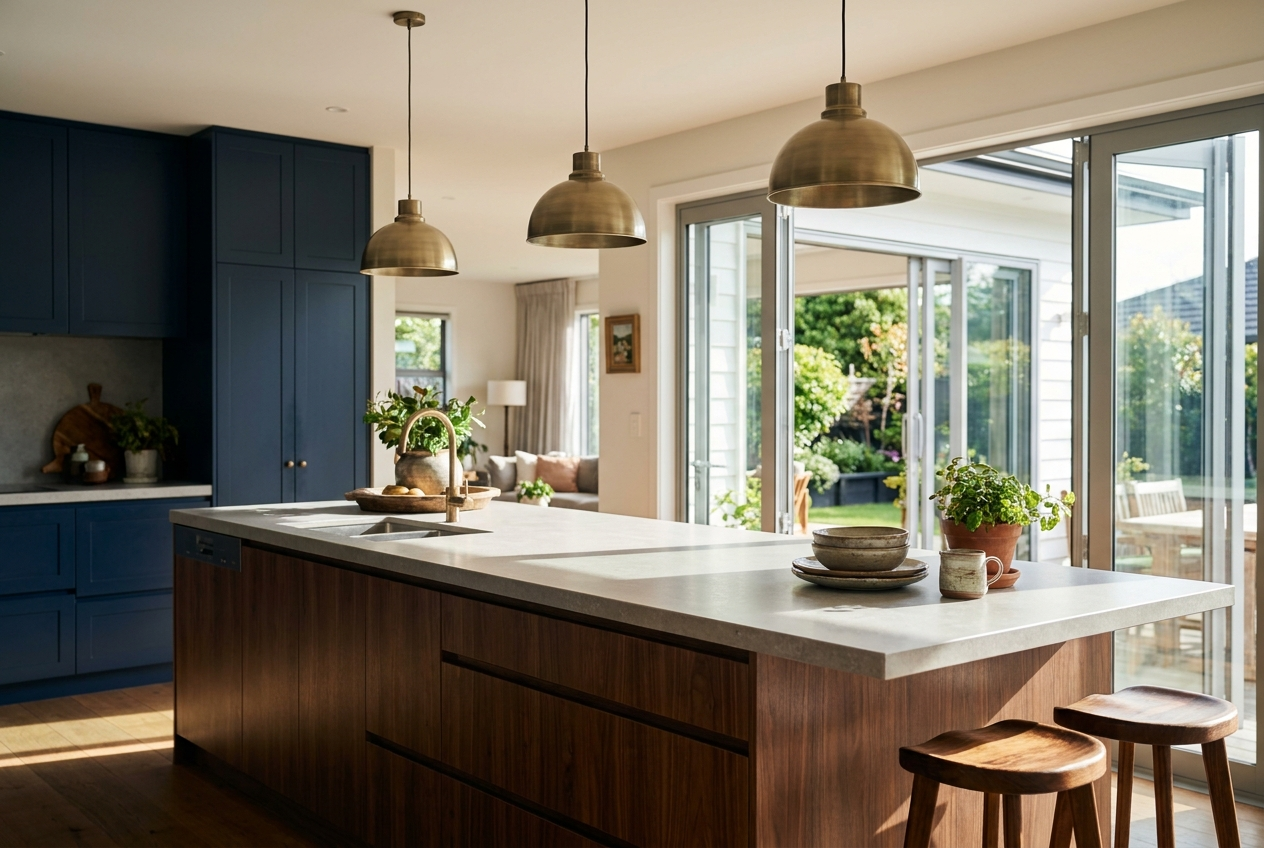
Choosing a layout is step one. Here’s how to choose the best kitchen layout for your space.
A beautiful kitchen starts with the right layout. Before you choose tapware, tiles, or benchtops—you need a plan that actually works for how you cook, live, and entertain.
Whether you're designing for a compact villa or an open-plan new build, this guide breaks down the best kitchen layouts NZ homeowners are using in 2026 - and how to know which one suits your space.
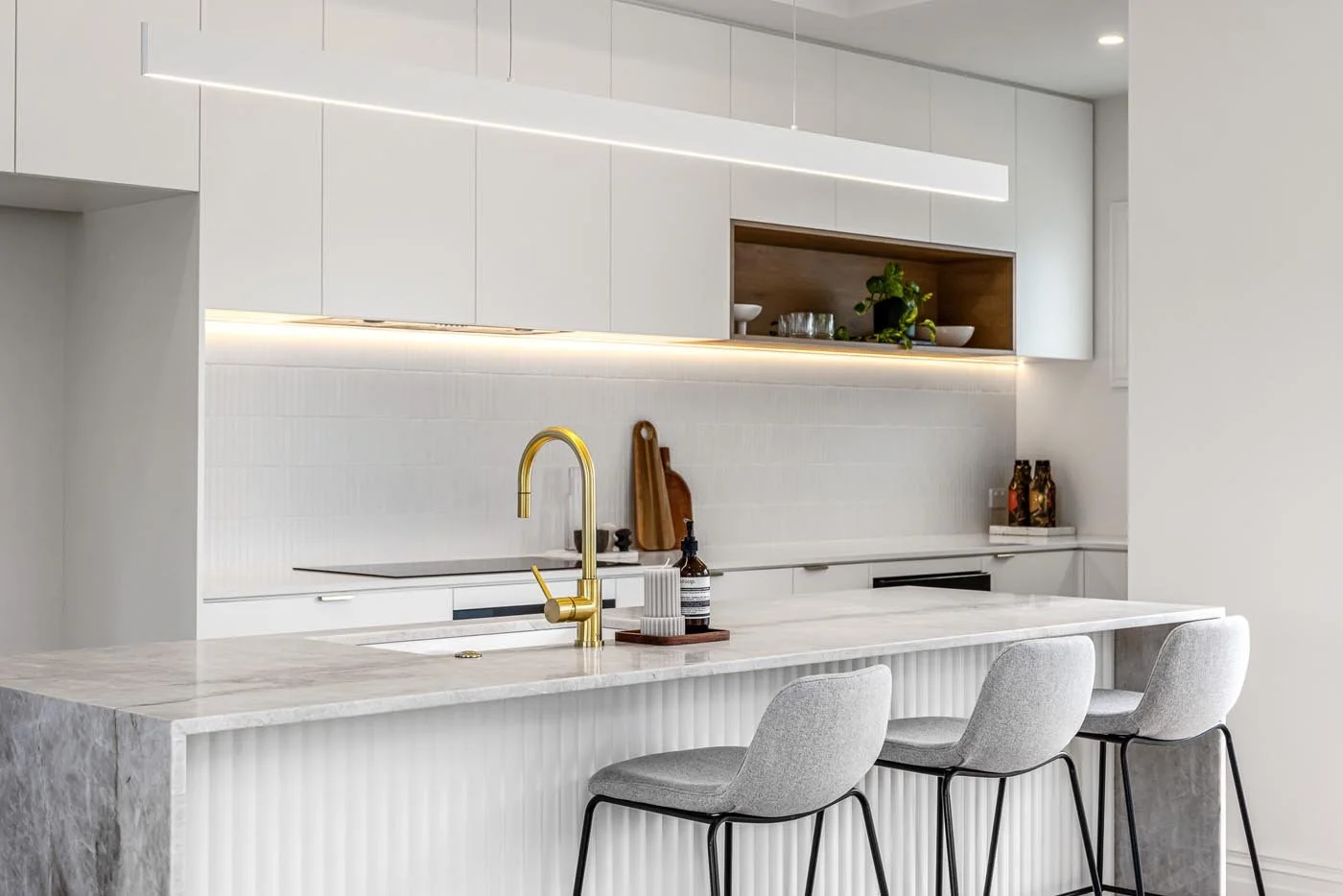
🔹 U-Shaped Kitchen
Best for: Medium to large homes with dedicated kitchen zones
Why it works:
Maximises bench and storage space
Keeps everything within reach
Great for multiple cooks or large families
Watch for:
Can feel enclosed in small homes
Needs enough width between cabinets (ideally 1.2m+)
Add a peninsula or breakfast bar for extra seating.
🔹 L-Shaped Kitchen
Best for: Smaller homes, villas, or open-plan living
Why it works:
Fits neatly into corners
Leaves room for dining or an island
Feels open and flexible
Watch for:
Limited overhead cabinet space
May require a smart pantry solution
Add floating shelves or a scullery cabinet to boost storage.
🔹 Galley Kitchen
Best for: Narrow homes, apartments, or townhouses
Why it works:
Efficient use of wall space
Perfect for busy cooks
Easy to zone into cooking and prep areas
Watch for:
Can feel tight without enough lighting
Less space for entertaining or eating
Use skylights or glass doors to keep it feeling open and bright.
🔹 Island Kitchen
Best for: Open-plan homes with space to spare
Why it works:
Adds flow between kitchen, dining, and living
Ideal for entertaining and family time
Great extra bench + storage space
Watch for:
Needs room to circulate around all sides
Can become cluttered without planning
We recommend at least 1m clearance on all sides of the island.
🧭 Not Sure What Works for You?
Take our free quiz to find your perfect layout:
👉 What’s the Best Kitchen Layout for Your Home? (Start Quiz)
Just answer a few quick questions about your lifestyle, space, and preferences—we’ll guide you to the layout that suits your home best.
👀 Quick Lifestyle Fit Guide
Busy family with school-age kids? → U-shaped or island
Couple in a townhouse? → Galley or L-shape
Frequent entertainer? → Island with bar seating
Solo cook, small kitchen? → L-shape or galley with open shelves
Love to prep together? → U-shape with dual zones
Want More Design Help?
👉 Check out our Kitchen Renovation Trends for NZ Homes (2026)
👉 Explore Our Kitchen Design Services
The measurements that decide whether a layout works
Layout names are the easy part. Whether a kitchen actually works comes down to a handful of dimensions, and nearly every uncomfortable kitchen has broken one of them.
Walkway between opposing runs: 1000 to 1200mm. Below 900mm two people cannot pass and a dishwasher door blocks the room. Above about 1300mm you are walking further than you need to all day. In a galley or around an island, this single number matters more than any other.
Bench height: around 900mm as standard, but it should suit whoever cooks. If that is someone tall, 920 to 950mm saves their back for twenty years. It costs nothing to specify at the design stage and cannot be changed later.
Bench depth: 600mm standard, with 650mm worth considering if you are running appliances or deep drawers.
Minimum island size: about 1200 x 900mm to be genuinely useful. Smaller than that and it is an obstacle with a bench top on it.
Seating at an island: 600mm of width per person and a 300mm overhang for knees.
Clear bench beside the hob and beside the sink, ideally 300mm one side and 600mm the other. This is the space you actually work in, and it is the first thing sacrificed when a layout is squeezed.
Appliance door swings. Draw them. An oven, dishwasher and fridge that cannot all be open at once is a daily irritation you will never stop noticing.
The work triangle, and why the zone approach is better
The classic advice is the work triangle between sink, hob and fridge, with each leg roughly 1.2 to 2.7 metres and the total under about 8 metres. It is still a useful sanity check, and if your plan has you walking a long way between those three, something is wrong.
But it was designed for one person cooking alone in a closed kitchen, which is not how most Auckland homes live now. A more useful modern approach is to think in zones:
Storage — fridge and pantry together, ideally near where the shopping comes in.
Prep — the biggest run of clear bench, with the bin drawer in it.
Cook — hob, extraction, pots and pans drawers directly under, oils and utensils within reach.
Clean — sink and dishwasher adjacent, with crockery stored close by so unloading is a two-step job.
Get those four zones in a sensible order and the triangle usually takes care of itself. The test of a good kitchen is whether two people can work in it without colliding.
Choosing by the shape of your room
Galley is the most efficient layout per square metre and is genuinely excellent in a narrow space, which is why it suits so many villa and bungalow kitchens. It only fails when it becomes a through-route: if the whole family walks down it to reach the back door, the cook is permanently in the way. Close one end if you possibly can.
L-shape is the most forgiving and the best default for open-plan. It keeps two walls free, opens naturally to a living space, and takes an island easily if the room allows.
U-shape gives the most bench and storage for the footprint and is superb for someone who really cooks. It needs a genuinely square-ish room, and the two internal corners need proper corner solutions or you lose a lot of storage to dead space.
Island is a layout modifier rather than a layout, and the honest rule is that the room has to be big enough. You need the island plus 1000 to 1200mm clear on every side you intend to use. Squeezing one into a room that cannot take it is the most common expensive mistake in kitchen design, and the most common reason a renovated kitchen feels worse than the one it replaced. A peninsula does most of the same work in less space.
Villa and bungalow kitchens are a specific problem
Most layout advice assumes an open rectangle. A character Auckland home usually offers you something else entirely.
The original kitchen is small and at the back, often in the lean-to, because it was designed as a service room rather than a living space.
The wall you want to remove is frequently load-bearing. It is usually removable, but it means a beam, engineering, and consent. That is a planned cost, not a surprise. See removing a load-bearing wall in Auckland.
Nothing is square. A century of settlement means walls that are out by 20 or 30mm over a run. Cabinetry has to be scribed to fit, which is why custom joinery so often beats flatpack in an older home. Flatpack assumes square.
High ceilings are an opportunity. Taking cabinetry to the ceiling rather than leaving a dust ledge adds serious storage and looks deliberate.
Chimney breasts and awkward returns often decide where the hob goes before you do.
Keep the character. The kitchen is the room where villas most often get stripped back to something generic. Retaining ceiling height, architraves and timber floors while the joinery is modern is what makes these houses sell. See our villa renovation guide.
The decisions that matter more than the shape
Drawers instead of base cupboards. The single biggest day-to-day improvement in any layout. You see everything, you reach everything, and nothing is lost at the back.
Where the bin goes. A pull-out bin in the prep zone, not under the sink at the other end of the kitchen.
Extraction that actually works, ducted outside and sized for the hob. Recirculating filters move smell around the room rather than removing it.
Corner solutions in any L or U. Without them you are donating a cubic metre of storage to the void.
Power where you use it, including in the island if you have one, and enough of it.
Lighting in layers: under-cabinet task lighting over the bench, not just a ceiling light that puts you in your own shadow.
A scullery or butler's pantry if the space allows. It is often a better use of a few square metres than a bigger island. See butler's pantry vs scullery.
What it costs, and what sets the price
Auckland kitchens run roughly $45,000 to $70,000 for a mid-range renovation, with high-end projects above $70,000. The layout itself barely changes that number. What does change it is whether you move walls, windows or services, because structural change is what pushes a kitchen well past $70,000.
Which means the cheapest good kitchen is usually the one that keeps the plumbing and the openings broadly where they are, and spends the money on joinery, drawers and bench instead. The full breakdown is in our Auckland kitchen cost guide, and our kitchen renovation page shows how we scope one.
A kitchen we've laid out
Merani Street, Belmont. Worth a look if you are weighing up the layouts above — it shows how the zones and clearances described here land in a real Auckland house rather than on a plan.
More finished kitchens in our before and afters, or see how we scope one on the kitchen renovation page.
Frequently Asked Questions
What is the most popular kitchen layout in NZ?
The L-shape with an island is the most common layout in modern NZ homes—offering the perfect balance between style and function in open-plan living.
Can I add an island to a small kitchen?
Yes—but only if you have at least 1m of clearance on each side. Otherwise, consider a peninsula or movable bench option instead.
Which layout is best for families?
U-shaped kitchens offer loads of bench space, great storage, and multiple work zones—ideal for family life.
Are galley kitchens outdated?
Not at all. Galley kitchens are space-efficient and very popular in modern townhouses and apartments—especially with good lighting and finishes.
Can I change my current layout during a renovation?
Yes—we’ll assess your space, structure, and budget to see what’s possible. Many homeowners completely change their kitchen flow during renovation.