How Much Does a Home Extension Cost in Auckland? (2026 Guide)
When your family has outgrown the house but you love the street, the school zone and your neighbours, extending is often smarter than selling. But the first question every homeowner asks is the hard one: what does a home extension cost in Auckland, really? In 2026, most extensions land somewhere between $3,500 and $8,000 per square metre, and the final number depends far more on what you build than on how many square metres you add. This guide breaks down real NZD ranges, the consent and timeline realities specific to Auckland, and whether adding on actually adds value.
All figures below are indicative, include GST, and will shift with your site, spec and design. For a firm number, the only honest answer is a proper scope and quote — but these ranges will get you oriented before you commit.
What a home extension costs per square metre in Auckland
The cleanest way to think about extension cost is per square metre, because it scales with the complexity of what's inside the new space — not just its footprint. As a 2026 Auckland guide:
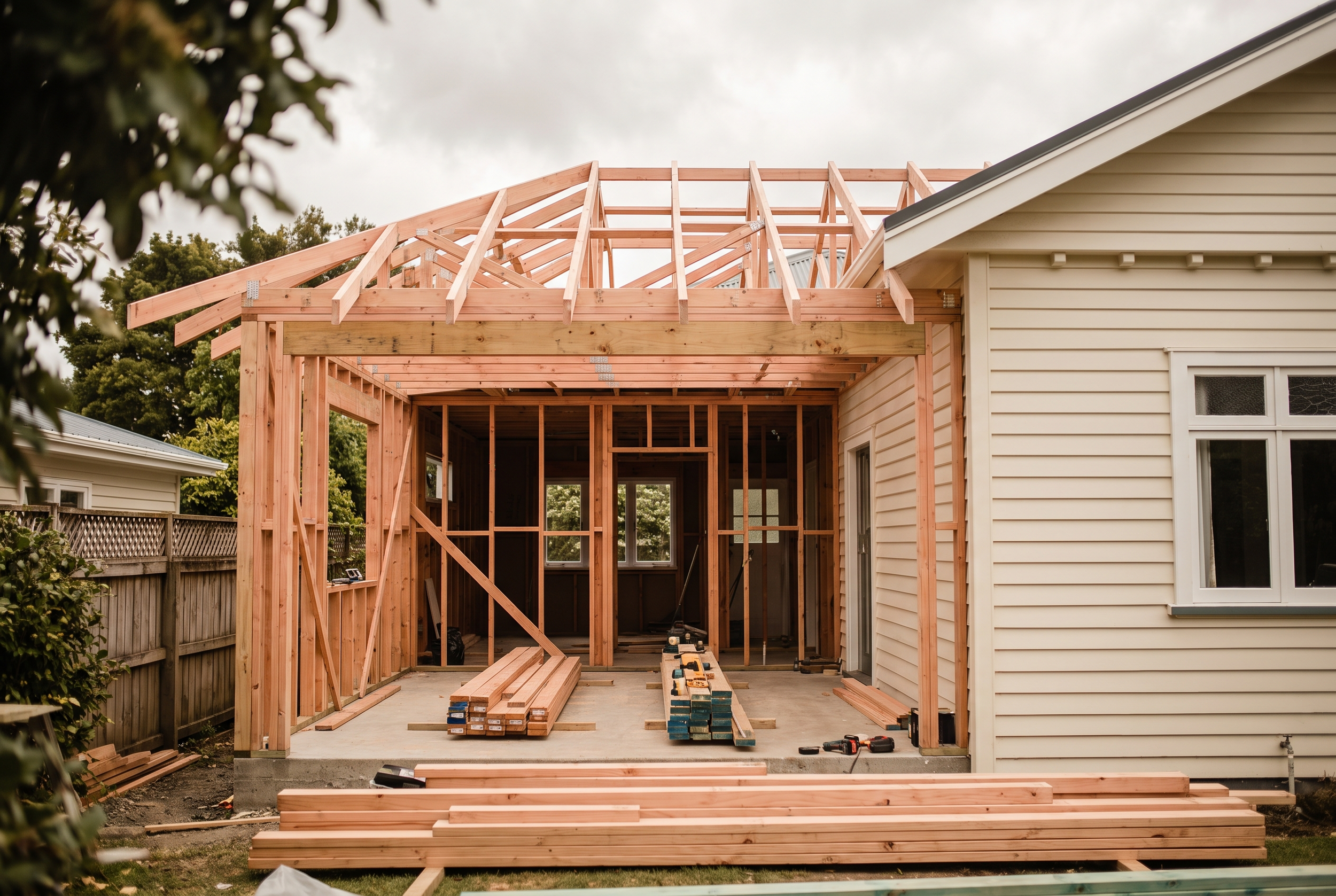
Simple single-room ground-floor extension (a larger living room, a bedroom, a study): roughly $3,500–$4,800/m².
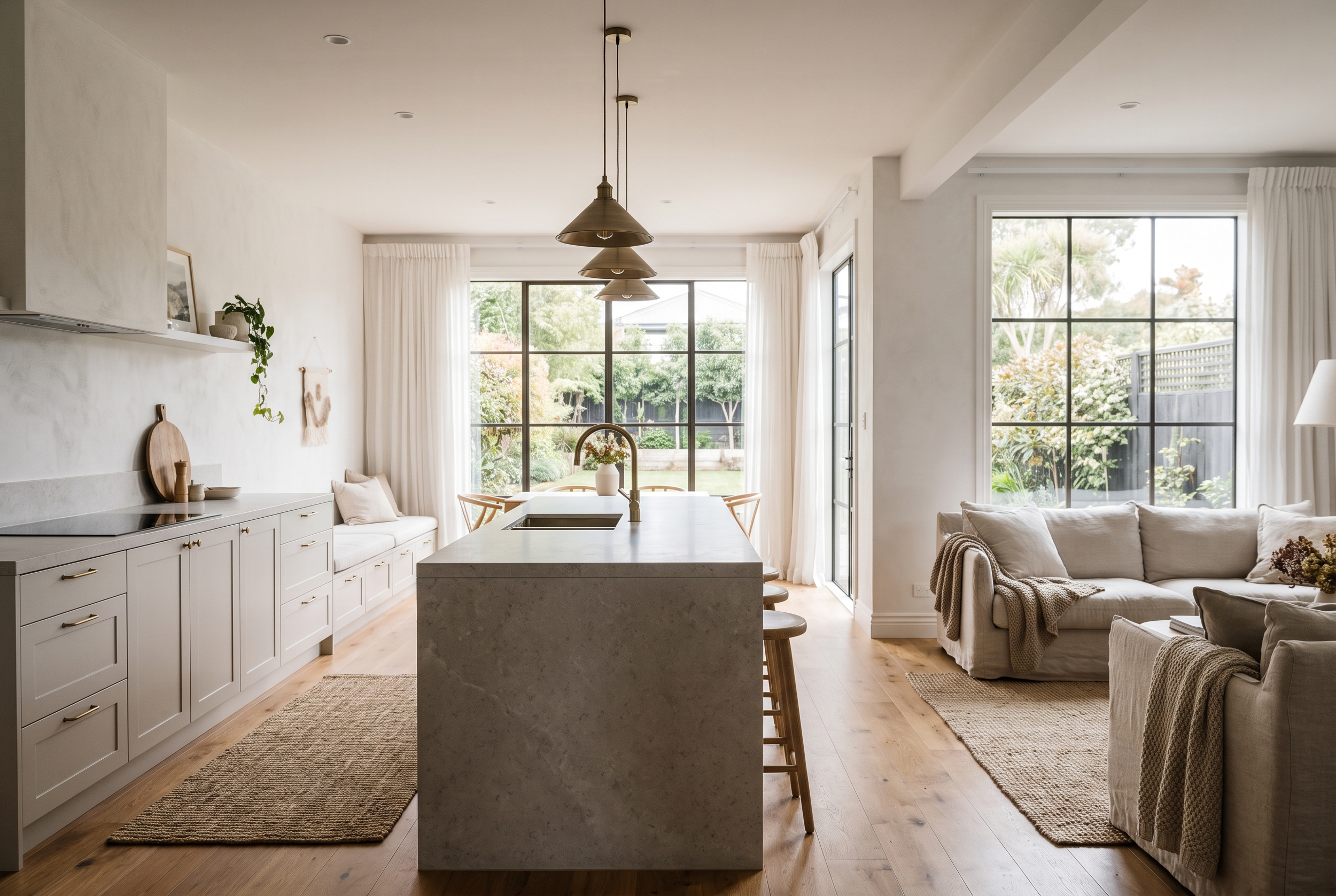
Mid-range family extension with open-plan living and good glazing: around $4,500–$6,800/m².
Extensions containing a new kitchen or bathroom: $5,500–$8,000/m², because plumbing, drainage, cabinetry and appliances all live in that space.
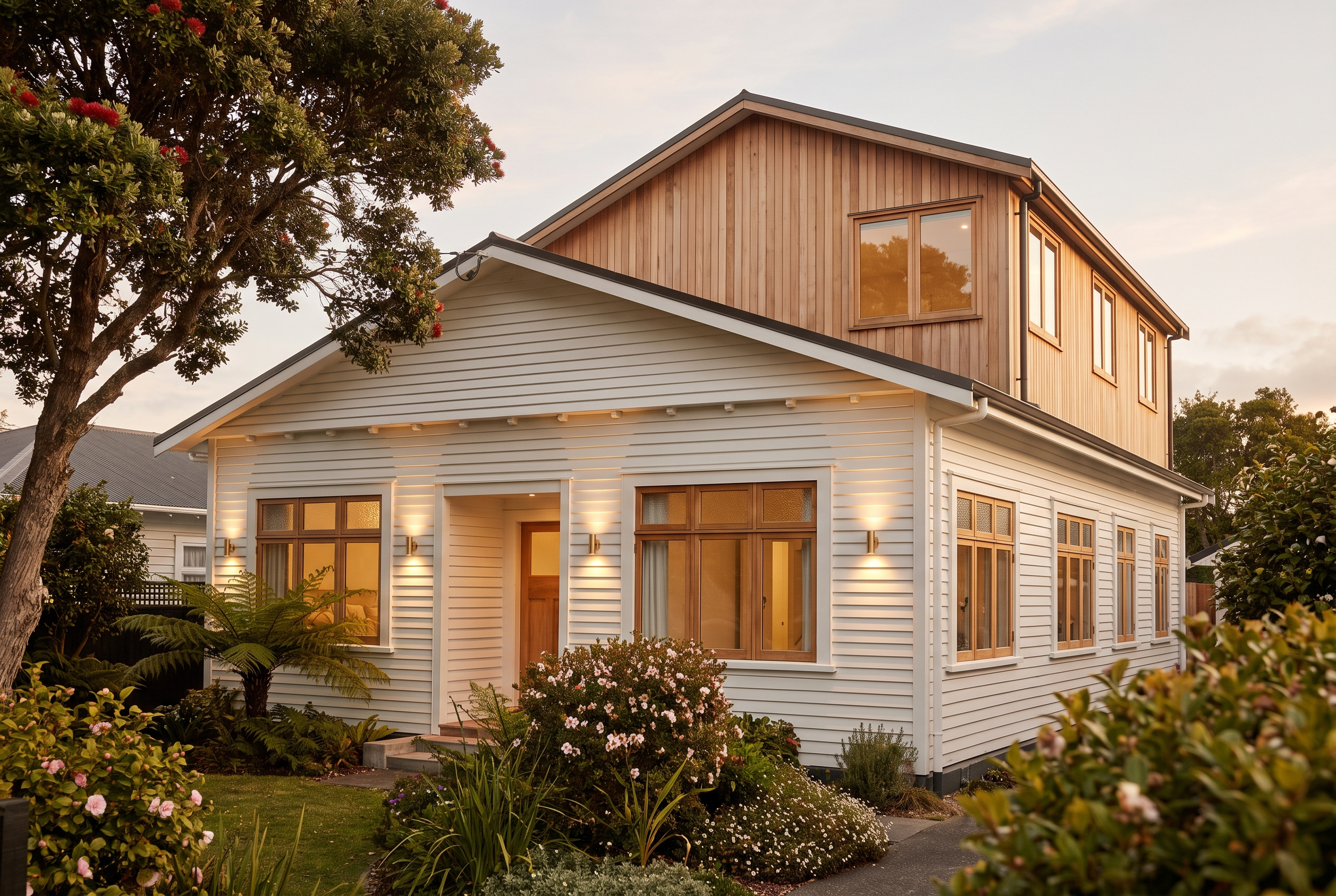
Second-storey additions: add roughly 10–30% on top of the equivalent ground-floor rate — often $5,500–$7,500/m² — because of structural reinforcement, foundation checks and access.
Put into project terms, a standard 30m² ground-floor extension typically runs $135,000–$204,000, while a full or partial second storey commonly starts around $200,000 and climbs past $400,000 on larger, higher-spec builds. If you're weighing an extension against doing over the whole house, our full home renovation cost guide sets out how those numbers compare.
Why second-storey additions cost more than building out
Building up is almost always dearer per square metre than building out, and it's worth understanding why before you fall in love with the idea. Adding a storey means the existing foundations have to be assessed and sometimes strengthened to carry the extra load. The existing roof usually comes off, the home needs weather protection while it's open, and the structural engineering is far more involved than a ground-floor addition. Access is harder, scaffolding is required, and you're often living around a much more disruptive build.
Building out is simpler — but it costs you land. If your section is tight, subject to site coverage limits, or you want to keep the backyard, up may still be the right call despite the premium. This is exactly the kind of trade-off worth talking through early, because it shapes both the budget and the design.
What's usually not included in the headline price
The per-square-metre ranges above cover the build itself. Several real costs sit outside them, and homeowners are caught out when they aren't budgeted for from the start:
Design and consent documentation: typically 8–12% of the build cost for architectural design, engineering and the drawings your consent application needs.
Auckland Council building consent fees: commonly $3,000–$8,000 for a standard residential extension.
Ground works and site costs: drainage, retaining, difficult access or a sloping Auckland section can all add up.
Connections and services: extending power, plumbing and heating into the new space.
A realistic all-in budget adds a sensible contingency (we suggest 10–15%) on top of the build price, because older Auckland homes love to hide surprises behind their linings.
Consent and timelines: the Auckland reality
Most extensions need building consent, and many also trigger resource consent depending on height, site coverage, and how close you build to a boundary (recession planes and setbacks are the usual culprits). This is where Auckland projects gain or lose months.
On timing: the council has a statutory 20 working days to process a complete building consent, but in practice residential applications in 2025–26 are averaging closer to 30 working days — and the clock stops every time the council requests more information, so a clean, complete application genuinely saves you weeks. Across the whole project, a typical Auckland extension runs 6–12 months from kick-off to handover: roughly 4–8 weeks for design and consent drawings, 6–10 weeks for consent processing, 12–28 weeks on site, and a couple of weeks for the Code Compliance Certificate at the end. Second-storey and multi-room builds sit at the longer end.
It's worth noting that building consent reforms are underway that aim to make it easier to renovate and extend without triggering resource consent in some cases. If they land as proposed, they could remove months and meaningful planning cost from certain projects — but until the rules are confirmed, plan for the current process and treat any simplification as upside.
Is a home extension worth it in Auckland?
For many Auckland homeowners, yes — extending can be one of the better-returning things you do to a property, provided you extend the right space. Adding a bedroom, a second bathroom or genuine open-plan living tends to deliver the strongest returns, because those are the things buyers pay for. Adding a bedroom via a well-executed second storey can lift a home's value by 10–20%, and a well-designed extension can outpace its own build cost in the right market and location.
The caveats matter. Over-capitalising — spending more than the top of your street will ever return — is the classic mistake, so the local market ceiling should shape your spec. And a poorly planned addition that doesn't flow with the existing home can cost you value. This is where design pays for itself: a proper full home renovation or extension design ties the new space into the old one so the finished home reads as one considered whole, not a bolt-on.
How to keep your extension budget under control
You have more influence over the final figure than the ranges suggest. A few decisions move the number most:
Build out before you build up where the section allows — it's cheaper per square metre.
Keep wet areas close to existing plumbing to avoid long, expensive drainage runs.
Lock the scope before you start. Changes mid-build are the single biggest cause of blowouts.
Invest in design up front. Good drawings mean a cleaner consent, accurate pricing and fewer surprises on site.
Get a realistic ballpark early so you're designing to a budget, not discovering one. Our renovation estimator is a fast way to sense-check your numbers before you spend on design.
Frequently asked questions
How much does a home extension cost in Auckland in 2026?
Most Auckland extensions cost $3,500–$8,000 per square metre (GST incl.), depending on whether the new space includes a kitchen or bathroom and whether you build out or up. A typical 30m² ground-floor extension lands around $135,000–$204,000. These are indicative ranges — your site, design and spec set the final figure.
Is it cheaper to extend or to move?
It depends on the numbers, but extending lets you keep your location, school zone and neighbourhood while getting the space you need — and it avoids the agent fees, legal costs and moving expenses of selling and buying. When you love where you live, extending is often the better financial and lifestyle call.
Do I need consent for a home extension in Auckland?
Almost always, yes — most extensions need building consent, and many also need resource consent depending on height, site coverage and boundary setbacks. Getting this assessed early is essential, because it affects both your timeline and your design.
How long does a home extension take?
Plan for 6–12 months end to end in Auckland: design and consent drawings, council processing (currently averaging around 30 working days for building consent), construction, and the final Code Compliance Certificate. Second-storey additions sit at the longer end.
Does a home extension add value to my home?
It can — extra bedrooms, a second bathroom and open-plan living deliver the strongest returns, and a well-executed addition can add more than it costs in the right market. The key is not over-capitalising for your street and designing the extension to flow with the existing home.
Ready to add on?
Thinking about a home extension in Auckland? Book a free consultation and we'll help you scope it properly — design, cost, consent and timeline — so you know exactly what your project involves before you commit. We manage the whole thing end to end with one team, so extending your home stays exciting rather than stressful.