
Do You Need an Interior Designer for Your Renovation? An Auckland Guide
If you're planning a renovation, one question comes up early: do you need an interior designer, or can you pull the look together yourself? It's a fair thing to ask before you commit real money. The honest answer for most Auckland homeowners is "it depends" — on the size of your project, how confident you feel making finish decisions, and whether the design and the build are handled by separate people or one team. This guide explains what an interior designer actually does, what they cost in Auckland (in real NZD ranges), and how to decide whether hiring one is worth it for your renovation.
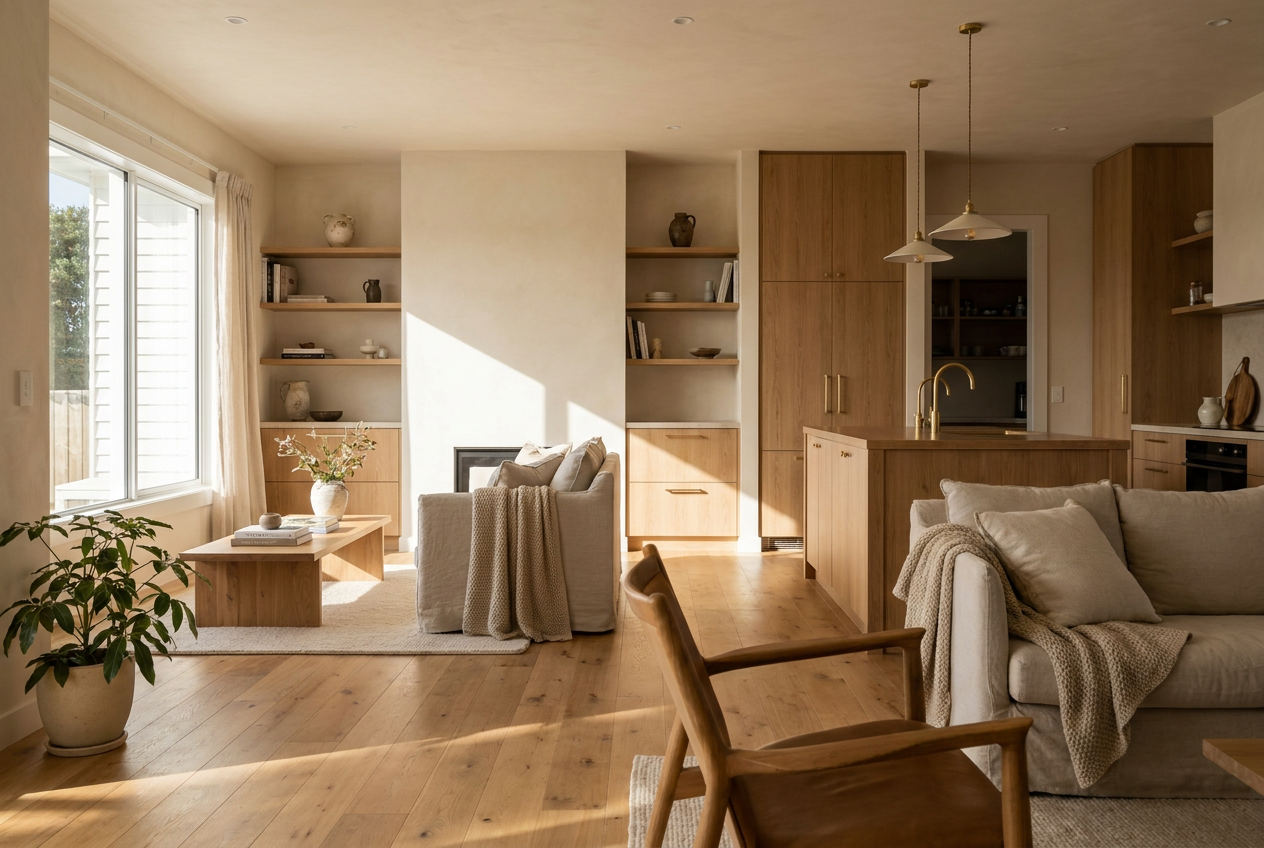
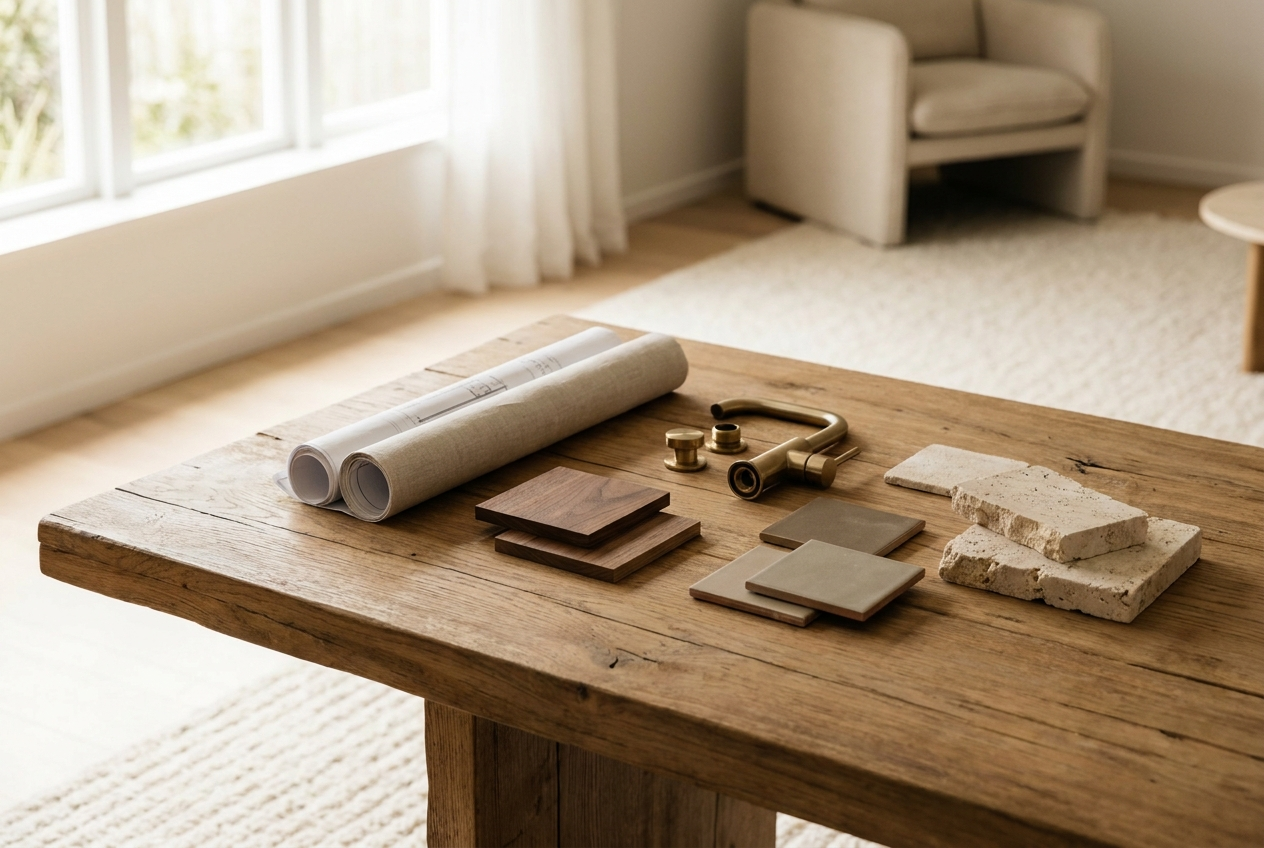
What does an interior designer actually do?
An interior designer does far more than choose cushions and paint colours. On a renovation, a good designer translates how you want to live into a buildable plan: space planning and layout, lighting, the flow between rooms, storage, and every material and finish from flooring to tapware. They balance how a space looks with how it works day to day, and they keep the whole scheme coherent so your new kitchen, bathroom and living areas feel like one home rather than three separate projects.
Crucially, they also save you from expensive mistakes. Moving a wall, repositioning plumbing, or ordering the wrong benchtop after it's installed costs thousands to fix. A designer catches those decisions on paper, where changes are free. For larger projects, the design fee often pays for itself in avoided rework and better-resolved spaces.
Interior designer, decorator, or design-build — what's the difference?
These terms get used interchangeably, but they mean different things, and the difference matters for a renovation.
An interior decorator focuses mostly on the surface layer — colour, furniture, soft furnishings and styling — without structural or construction changes. That's perfect if your layout already works and you just want a refresh.
An interior designer works at the structural and spatial level too: layouts, joinery, lighting plans, and detailed finish specifications that a builder can price and construct. This is what most renovations need.
A design-build company brings the design and the construction together under one roof. Instead of hiring a designer, then finding a builder, then managing the gaps between them, one team designs the renovation and delivers it. At Key Interiors, interior design services are part of the full package — in-house design, 3D concept renders and custom joinery, all coordinated by a single point of contact. For most homeowners that removes the most stressful part of renovating: the handover between the person who drew it and the people who build it.
How much does an interior designer cost in Auckland?
Cost is usually the deciding factor, so here are indicative ranges. All figures are guides only, exclude or note GST where relevant, and vary with the size and complexity of your project — treat them as ballparks, not quotes.
Auckland interior designers typically charge one of three ways:
Hourly rates: roughly $100–$250 per hour + GST, common for smaller jobs or consulting.
Per-room or per-package fees: a single kitchen design often runs $4,000–$6,000, and a bathroom design package commonly starts around $2,400 + GST.
Whole-home design fees: a full-home interior design scheme can sit anywhere from $10,000 to $50,000+, depending on the size of the home and the level of detail.
The cost depends heavily on the size of the space, the style you're after, and the materials and finishes you choose. A small, simple scheme with off-the-shelf products costs far less than a large home with bespoke joinery and high-end stone.
It's worth knowing that with a design-build renovation, design is frequently built into the overall project rather than charged as a separate line. For context, Key Interiors bathroom renovations start from around $25,000+, kitchens from around $35,000+, and complete home renovations from around $150,000+ (all indicative, GST included, and scope-dependent). If you'd like a ballpark for your own project before you talk to anyone, our renovation estimator gives you a quick figure in a couple of minutes.
When you really need an interior designer (and when you might not)
You don't need a designer for every job. Here's how to tell which side of the line you're on.
You'll likely benefit from a designer if:
You're moving walls, plumbing or windows, or changing the layout in any meaningful way.
It's a whole-home or multi-room renovation and you want everything to feel cohesive.
You're working with a villa or bungalow where heritage character and modern function need to be balanced carefully.
You're renovating for resale and want choices that appeal broadly and add value.
You feel overwhelmed by decisions — finishes, fixtures, lighting, colours — and want someone to resolve them with you rather than for you.
You might be fine without one if:
The layout already works and you're doing a like-for-like refresh (new paint, a vanity swap, updated tapware).
You have a clear, confident vision and enjoy sourcing and specifying products yourself.
It's a small, single-room job with a tight, simple scope.
If you're somewhere in between, even a few paid hours of design advice early on can be the best money you spend — it sets the direction before any expensive decisions are locked in.
The 2026 design trends a designer will help you get right
This matters more in winter, when we spend the most time indoors and notice how a home actually feels. The current direction in New Zealand interiors is toward warm, layered, lived-in homes rather than stark, cool minimalism — exactly the brief a good designer is built for.
A few of the trends shaping Auckland renovations heading into 2026:
Warm neutral bases — oat, cream, sand and taupe replacing crisp white, for rooms that feel calm and cosy in the colder months.
Moodier accent colours — richer blues, dark browns and berry-plum tones used deliberately on cabinetry, feature walls or joinery.
Darker, richer timbers — walnut, honey oak and smoked finishes returning after years of pale, cool wood.
Texture layering — bouclé, wool, linen, rattan and hand-trowelled plaster combined for depth and warmth.
Year-round comfort — better insulation, quality glazing and well-planned heating so the home stays comfortable without leaning on the heat pump all winter.
Getting this balance right — bold without being busy, warm without being dark — is exactly where design experience earns its keep. You can see how we apply it across real homes on our renovation projects page.
The design-build advantage
The biggest hidden cost in renovating isn't a material — it's the gap between the person who designs your home and the people who build it. When they're separate, you become the middle person: chasing answers, resolving conflicts, and absorbing the delays when the drawing and the build don't quite line up.
A design-build approach closes that gap. The same team that designs your renovation prices it, builds it, and manages every trade, so the home you're shown in the concept renders is the home you actually get. For most Auckland homeowners, that's the real value of bringing design in-house: less stress, fewer surprises, and a result that holds together.
Frequently asked questions
Do I need an interior designer for a small renovation?
Not always. For a single-room refresh with no layout changes, you can often manage with your own choices or a short paid consultation. For anything involving structural changes, joinery or a whole-home scheme, a designer usually saves you money and stress overall.
How much does an interior designer cost in Auckland?
Indicatively, around $100–$250 per hour + GST, $4,000–$6,000 for a kitchen design, from about $2,400 + GST for a bathroom package, and $10,000–$50,000+ for a full-home scheme. With a design-build renovation, design is often included in the overall project cost rather than charged separately.
What's the difference between an interior designer and a decorator?
A decorator focuses on colour, furniture and styling without structural change. A designer also handles layout, lighting, joinery and detailed finish specifications a builder can construct — which is what most renovations require.
Is hiring an interior designer worth it?
For most renovations beyond a simple refresh, yes. A designer helps you avoid costly mistakes, makes confident decisions faster, and delivers a more cohesive, higher-value result — benefits that typically outweigh the fee on larger projects.
Does Key Interiors include interior design?
Yes. Our interior design services are part of our full-service design-build offering, with in-house design, 3D renders and custom joinery managed by a single point of contact from concept to completion.
Ready to scope your renovation?
If you're weighing up whether to bring in a designer, the easiest next step is a conversation. Book a free consultation and we'll help you scope your renovation properly — design, cost and timeline — with no obligation. Prefer a ballpark first? Try our renovation estimator for a quick indicative figure, then get in touch when you're ready to talk it through.