
Warm Bathroom Ideas for an Auckland Winter
If your bathroom is the coldest room in the house from June to August, you are not alone. Auckland's damp, temperate winters are hard on bathrooms — tiled floors feel like ice underfoot, mirrors fog, towels never quite dry, and mould creeps into the grout. The good news is that a well-planned renovation can fix all of it. These warm bathroom ideas are built for New Zealand homes and Auckland's climate, covering underfloor heating, better ventilation, warm materials and the layout choices that make a bathroom feel like a sanctuary rather than a cold-morning ordeal.
Warmth in a bathroom is not one feature — it is a combination of heating, moisture control, insulation and the right surfaces. Get the mix right and you get a room that is comfortable on the coldest Auckland morning, dries out quickly after a shower, and stays free of the black mould that plagues so many older homes.
Why Auckland bathrooms feel so cold in winter
Much of Auckland's housing stock is villas, bungalows and mid-century homes that were built with little or no insulation. Bathrooms in these homes often sit on an exterior wall, have a single-glazed window, and lose heat fast. Add the moisture from daily showers, limited ventilation and hard, cold surfaces like ceramic tile, and you get a room that feels chilly and stays damp long after you have left it.
A renovation is the ideal moment to solve this properly, because the fixes that matter most — heating in the floor, insulation in the walls, a better extraction fan, warmer glazing — are far easier to install when the room is already opened up. Retrofitting them later costs more and disrupts finished surfaces. If you are planning a bathroom renovation this year, winter comfort should be part of the brief from day one.
1. Underfloor heating: the biggest comfort upgrade
Nothing transforms a winter bathroom like a warm floor. Underfloor heating in New Zealand bathrooms is usually electric — thin heating mats or cables laid under the tiles and controlled by a thermostat, often on a timer so the floor is warm before you wake up. It is the single upgrade our clients mention most after the fact.
Electric underfloor heating suits most Auckland bathroom renovations because the heated area is small and it is simple to install during a re-tile. Running costs are modest when used on a timer for a few hours a day rather than left on constantly. As an indicative guide, adding electric underfloor heating typically adds a few thousand dollars to a bathroom renovation depending on the floor area and the system chosen — worth confirming as part of your detailed quote.
A warm floor also helps the whole room dry out faster, which quietly reduces the damp-and-mould problem that cold tiled floors make worse.
2. Heated towel rails and targeted heating
A heated towel rail does two jobs: it keeps towels dry and warm, and it takes the edge off the room's air temperature. Dry towels matter more than people think — a damp towel left in a cold bathroom is a mould magnet and never feels pleasant against the skin on a July morning.
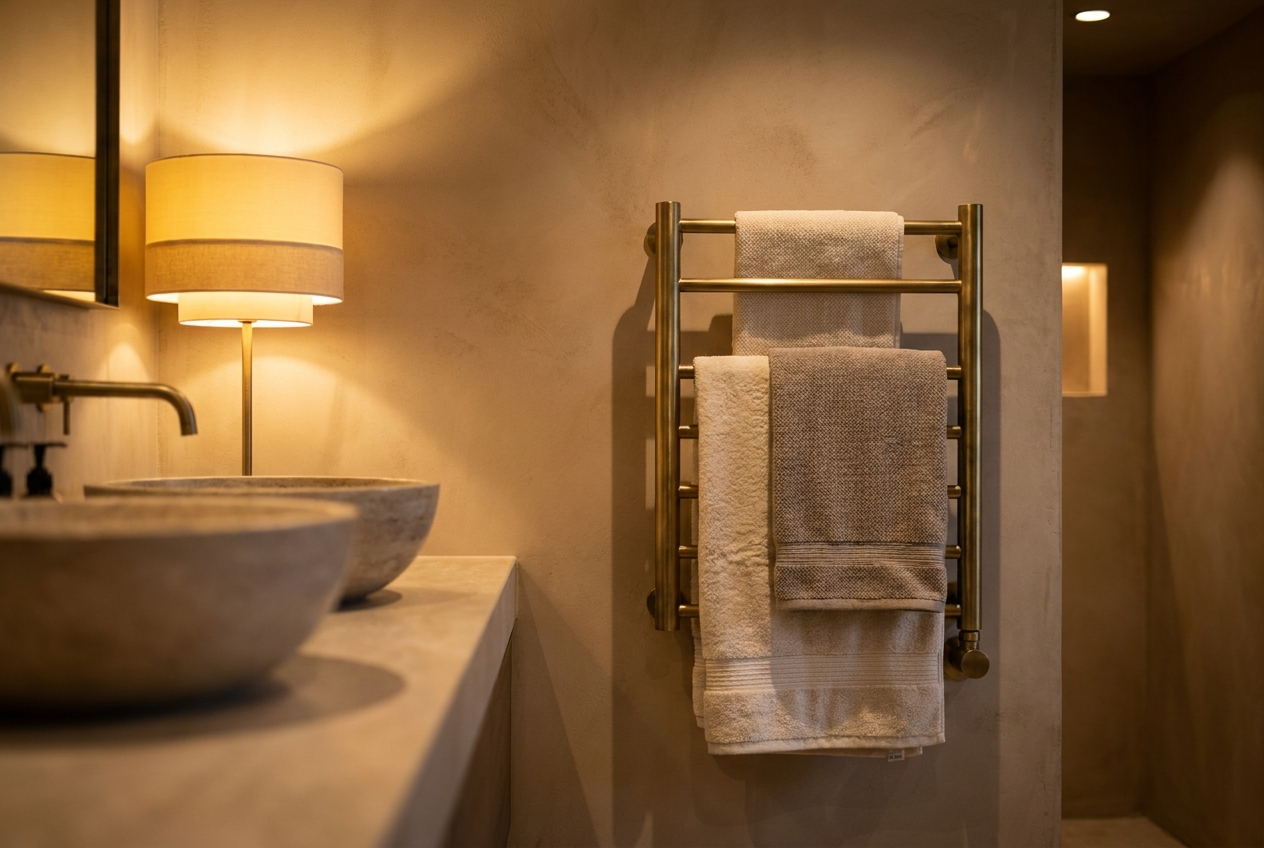
Choose an electric or hardwired rail sized to the room, and consider a timer or smart switch so it runs during your morning and evening routine rather than all day. For a bit of understated luxury, brushed brass and matte black rails sit beautifully against the warm, earthy palettes trending in 2026 — a nice change from the cold chrome that dominated the last decade.
For rooms that stay stubbornly cold, a wall-mounted heater or a heat-lamp-and-extractor combination unit adds fast, targeted warmth for the few minutes you actually need it.
3. Ventilation: warmth is nothing without moisture control
Here is the part homeowners often miss: you cannot make a bathroom genuinely warm and comfortable if it stays damp. Moisture makes a room feel colder, fogs everything, and feeds the black mould that ruins grout, paint and sealant. Good bathroom ventilation in NZ homes is the foundation that heating sits on top of.
The key upgrades during a renovation are:
A properly sized, quiet extractor fan ducted to the outside — not just into the ceiling cavity, which simply moves the moisture problem elsewhere.
A humidity-sensing or timer-run fan that keeps working for a few minutes after the shower stops.
An openable, well-sealed window where the layout allows, for natural cross-ventilation on milder days.
Solve the moisture and the room warms up faster, dries out between uses, and stays healthier — which protects your renovation investment for years.
4. Warm materials and a cosier palette
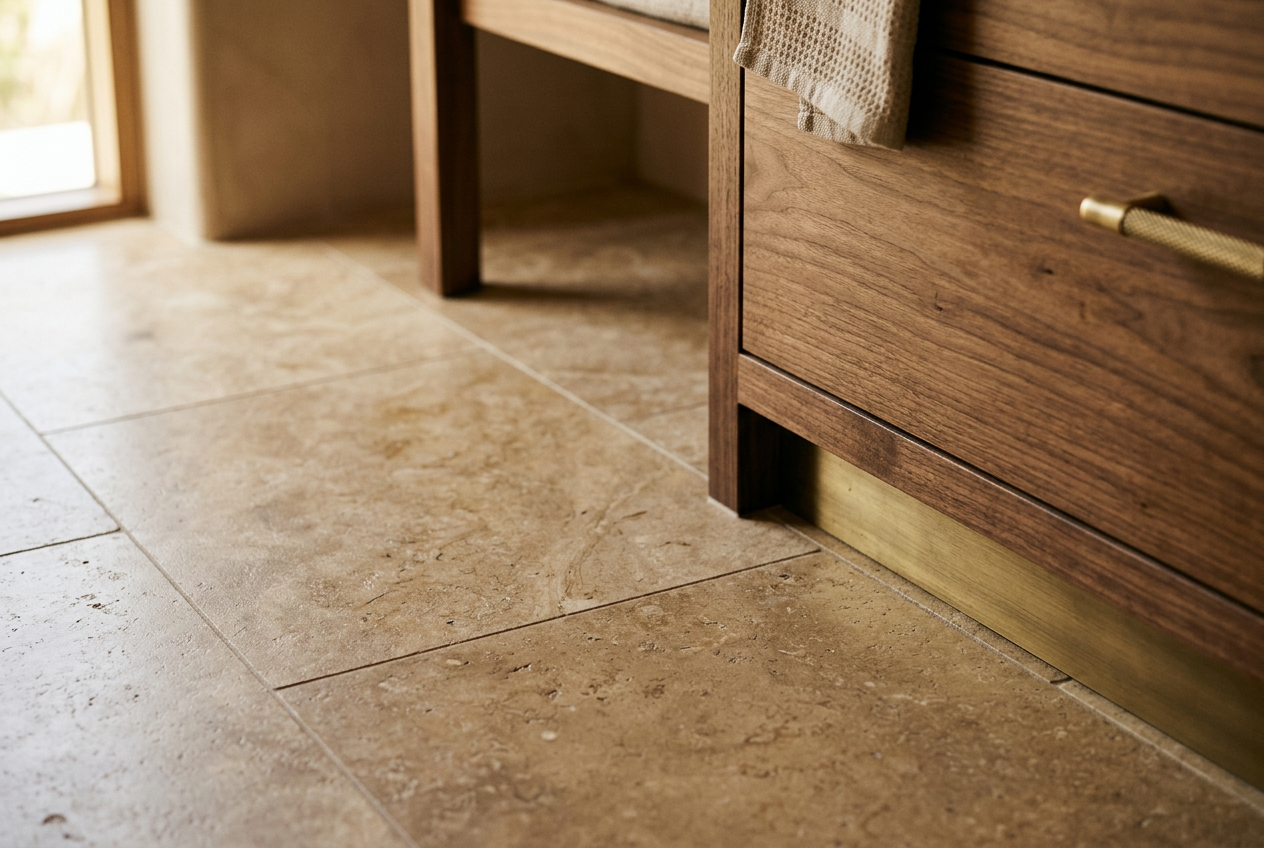
Materials do a lot of the emotional work of a warm bathroom. The 2026 trend across New Zealand is a clear move away from cold, high-contrast greys toward softer, warmer tones — sand, warm white, honed natural stone and earthy neutrals — paired with timber and warm metals rather than stark chrome.
Ideas that make a bathroom feel warmer without touching the heating:
Timber vanities and shelving — warm walnut or oak-look joinery instantly softens a room. Custom joinery lets you fit it precisely to the space and add the storage that keeps clutter down.
Honed rather than polished stone or large-format tiles — a matte, tactile finish reads warmer than a cold, shiny surface.
Warm, layered lighting — a mix of soft ambient light and task lighting at the mirror feels far cosier than a single cold-white ceiling light.
Textured plaster or warm paint tones on the walls above the tile line for depth and softness.
If you would like help pulling a cohesive warm palette together, our interior design service does exactly this as part of the renovation.
5. Insulation, glazing and layout — the invisible fixes
The upgrades you cannot see matter just as much as the ones you can. While the walls are open during a renovation, it is the perfect time to add wall insulation and, where practical, upgrade a single-glazed window to double glazing. Both dramatically reduce heat loss and condensation on the coldest Auckland mornings.
Layout helps too. A wet-room-style walk-in shower — increasingly popular in NZ bathrooms in 2026 — reduces cold, awkward corners and makes a small room feel more open and easier to heat evenly. Keeping the toilet and shower zones sensibly placed, with the heated towel rail near where you step out, means the warmth lands where you actually need it.
Indicative costs for a warm bathroom renovation in Auckland
Every bathroom is different, so treat these as indicative ranges only — all figures include GST and vary with size, spec and the condition of the existing space.
A full bathroom renovation with Key Interiors starts from around $25,000+, and the winter-comfort features above sit within that scope rather than being separate luxuries. As a rough guide, underfloor heating and a quality heated towel rail together typically add a few thousand dollars, and upgrading ventilation or glazing adds further depending on the work involved. Because the ranges depend heavily on your specific room, the most reliable way to get a real number is to try our renovation estimator or book a free consultation for a tailored quote.
The important point: winter-comfort features are best specified up front, not added later. Building them into the original scope is both cheaper and cleaner than retrofitting.
Frequently asked questions
Is underfloor heating worth it in an Auckland bathroom?
For most homeowners, yes. Auckland winters are cold and damp enough that a warm floor makes a daily difference, and because bathrooms are small the install cost and running cost are modest — especially on a timer. It is one of the most-loved upgrades our clients mention after their renovation.
How do I stop mould in my bathroom for good?
Mould needs moisture, so the long-term fix is ventilation, not just scrubbing. A properly ducted, correctly sized extractor fan (ideally humidity-sensing), combined with a warm floor that helps the room dry out and good wall insulation, removes the damp conditions mould needs. Sealing and grout choices matter too, which is why it is best handled during a renovation.
What is the warmest flooring for a bathroom in NZ?
Tiles or stone with electric underfloor heating give you the durability of a hard floor with none of the cold underfoot. Without heating, large-format porcelain or a warm timber-look vinyl feels less cold than ceramic, but underfloor heating is the standout choice for a genuinely warm bathroom.
Can you make a small or old villa bathroom warmer?
Absolutely. Small rooms are actually easy and inexpensive to heat well, and a renovation lets you add insulation, better glazing and ventilation that older villas never had. The result is a compact bathroom that is warmer and healthier than the original ever was.
How long does a bathroom renovation take?
Most bathroom renovations run a few weeks on site once work begins, depending on scope, the condition of the existing space and any consent requirements. We manage all trades and give you a clear timeline up front so there are no surprises.
Ready for a warmer bathroom this winter?
A cold, damp bathroom is not something you have to put up with — the right renovation turns it into the warmest, most comfortable room in the house. If you are thinking about a warm bathroom renovation in Auckland, book a free consultation and we will help you scope it properly: heating, ventilation, materials, cost and timeline. Prefer a ballpark first? Try our renovation estimator for an indicative figure before you commit.